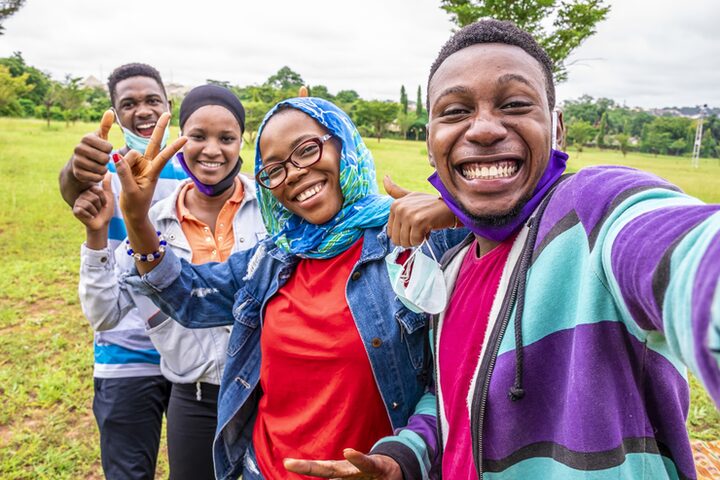
Africa stands at a defining moment in its history. Across its 54 countries, a new generation is growing up with ambitions, creativity, energy, and an increasing desire to shape the future of the continent. From young entrepreneurs developing innovative businesses to students pursuing education, technology enthusiasts creating digital solutions, farmers exploring modern agricultural practices, and community leaders addressing social challenges, African youth are demonstrating that they are not merely observers of development but potential drivers of it.
Yet, behind this enormous potential lies an important question: Is Africa doing enough to prepare its young people to lead its future?
Africa’s greatest resource is often associated with its minerals, oil, fertile agricultural land, forests, and natural wealth. While these resources are important to economic development, the continent’s most valuable long-term investment may be its people, particularly its young population.
According to the Organisation for Economic Co-operation and Development (OECD), Africa’s working-age population is projected to increase from approximately 849 million in 2024 to 1.556 billion by 2050. This growth represents an extraordinary opportunity, but population growth alone does not guarantee prosperity.
The future of Africa will depend significantly on whether its governments, institutions, businesses, and communities can transform this growing population into a skilled, productive, innovative, and empowered generation.
Africa’s future will not be determined simply by how many young people it has, but by how effectively it invests in their potential.
The Youth Population: Africa’s Greatest Development Opportunity
Africa has one of the youngest populations in the world. This demographic reality presents an opportunity that could reshape the continent’s economic and social future.
The Mastercard Foundation’s Africa Youth Employment Outlook 2026 estimates that the continent has approximately 532 million young people aged 15–35. It also projects continued growth in this population over the coming decades.
This presents what development experts describe as a demographic dividend: the potential economic benefit a country can experience when its working-age population grows relative to its dependent population, provided that the right investments and opportunities exist.
However, a demographic dividend is not automatic. A large youth population without sufficient education, healthcare, productive employment, and economic opportunities can place considerable pressure on national institutions and public resources.
The challenge, therefore, is not simply to accommodate young people but to create an environment where they can participate meaningfully in national development.
Governments must begin to see youth investment not as an act of charity or a political obligation, but as a long-term economic strategy. Every young person who gains relevant skills, starts a sustainable business, contributes to research, or develops a solution to a community problem represents an opportunity for broader economic progress.
Education Must Move Beyond Certificates
Education remains one of the strongest foundations for individual empowerment and national development. However, Africa must increasingly examine not only how many young people attend school but also what they learn and how effectively they can apply that knowledge.
For many young Africans, completing secondary or tertiary education is considered a major achievement. Unfortunately, obtaining an academic qualification does not always translate into employment, financial independence, or the ability to solve practical problems.
This raises an important concern about the relationship between education and the realities of the labour market.
The UNESCO, UNICEF, and African Union 2025 continental report on learning and skills development emphasises the need to transform African education systems so that young people develop the competencies required to thrive in changing economies.
Africa needs an education system that combines academic knowledge with practical experience, critical thinking, communication, creativity, problem-solving, entrepreneurship, and technological competence.
Technical and vocational education should also receive greater recognition. Not every young person must follow the same academic pathway to become successful. Skills in construction, agriculture, electrical installation, engineering, tailoring, healthcare support, digital services, and other practical professions can contribute significantly to national development.
Furthermore, learning should not end when someone leaves a classroom. In a rapidly changing world, lifelong learning is becoming increasingly important.
Young people must be encouraged to acquire new skills, adapt to emerging industries, and remain open to opportunities beyond traditional career paths.
A certificate may open a door, but practical knowledge, relevant skills, and the ability to create value help a person move forward.
Youth Unemployment: Moving from Job Seeking to Opportunity Creation
One of Africa’s most pressing development challenges is the difficulty many young people face in securing decent and sustainable livelihoods.
Every year, millions of young Africans enter the labour market. However, formal employment opportunities are not expanding at a pace sufficient to absorb all those seeking work.
The African Development Bank has repeatedly highlighted the gap between the number of young people entering the labour market and the number of formal jobs being created.
This challenge requires more than encouraging young people to submit applications and wait for employment opportunities.
Africa must build stronger entrepreneurial ecosystems that allow young people to identify problems, develop solutions, establish businesses, and create economic value.
Entrepreneurship should not be presented as an easy alternative to unemployment. Starting and sustaining a business requires discipline, market knowledge, financial management, innovation, access to customers, and the ability to manage risk.
Many young entrepreneurs have promising ideas but lack access to affordable financing, business development services, mentorship, suitable infrastructure, and reliable markets.
Governments and development partners must therefore move beyond organising occasional entrepreneurship workshops. They should establish practical support systems that accompany young entrepreneurs from the idea stage through business registration, product development, market entry, growth, and sustainability.
Financial institutions should also explore appropriate financing models for young entrepreneurs, including small-business loans, seed funding, grants, and investment opportunities.
At the same time, governments must create a business environment where young people can establish and operate enterprises without unnecessary administrative barriers.
Africa should not only produce graduates who search for jobs; it should also develop innovators, business owners, researchers, and skilled professionals capable of creating opportunities for others.
Digital Technology: Opening New Doors for African Youth
The world is experiencing rapid technological transformation. Digital platforms, artificial intelligence, data analytics, software development, e-commerce, and online communication are changing how people learn, work, trade, and conduct business.
For Africa, this transformation presents an opportunity to overcome certain traditional economic limitations and participate more actively in the global digital economy.
A young person in Sierra Leone, Nigeria, Ghana, Kenya, or Uganda can potentially develop digital skills, provide services to international clients, participate in remote work, establish an online business, or use technology to address local challenges.
However, these opportunities remain unequal.
Access to reliable electricity, affordable internet, appropriate devices, digital literacy, and quality training continues to influence who can participate in the digital economy.
It is therefore important that African countries invest in digital infrastructure while ensuring that digital education reaches communities beyond major cities.
Young people should be introduced to practical skills such as computer literacy, graphic design, programming, digital marketing, data analysis, cybersecurity awareness, and responsible artificial intelligence use.
Technology should also be connected to real economic activities. For example, farmers can use digital tools to access market information, small businesses can use online platforms to reach customers, and students can access learning resources beyond traditional classrooms.
Nevertheless, technology must not become another source of inequality. If only wealthy communities and urban populations can access digital opportunities, the digital divide may deepen existing social and economic inequalities.
Africa must therefore pursue inclusive digital transformation, ensuring that young people from rural communities, low-income households, and disadvantaged backgrounds are not left behind.
Empowering Young Women: Development Must Include Everyone
No discussion about Africa’s future can be complete without addressing the participation and empowerment of young women.
Across the continent, young women continue to face barriers that affect their access to education, employment, entrepreneurship, leadership, finance, and technology.
In some communities, cultural expectations, early marriage, limited educational opportunities, inadequate infrastructure, and unequal access to economic resources restrict their ability to pursue their ambitions.
These barriers do not only affect individual women; they also limit the development potential of entire communities and nations.
When a young woman receives quality education, develops professional skills, establishes a business, or participates in leadership, the benefits can extend to families, communities, and future generations.
African governments, educational institutions, financial organisations, and private-sector actors must strengthen initiatives that support girls’ education, women’s entrepreneurship, leadership development, financial inclusion, and access to digital technology.
Empowerment must also involve creating safe environments where young women can express their ideas, participate in decision-making, and pursue opportunities without discrimination or intimidation.
Africa cannot achieve inclusive development while a significant portion of its young population remains excluded from meaningful participation.
Sierra Leone: Turning Youth Potential into National Progress
The discussion about youth empowerment becomes particularly important when viewed through the experience of Sierra Leone.
Like many African countries, Sierra Leone has a young population with enormous potential. Its young people are involved in education, agriculture, small businesses, technology, creative industries, community development, and various forms of informal economic activity.
However, many continue to encounter challenges involving unemployment, limited access to capital, inadequate infrastructure, skills gaps, and unequal access to opportunities.
These challenges require coordinated action.
Sierra Leone must continue strengthening its education and technical training systems while connecting learning more directly to the needs of the economy.
There is also a need to expand opportunities in agriculture, digital services, tourism, manufacturing, renewable energy, and small-business development.
Agriculture, in particular, deserves greater attention. Rather than viewing it only as traditional subsistence activity, young people should be encouraged to see agriculture as a business sector with opportunities in modern farming, processing, packaging, storage, transportation, and marketing.
Similarly, digital technology can help young Sierra Leoneans access new markets, improve business operations, and develop services that reach customers beyond their immediate communities.
Community-based training initiatives can also play an important role. Not every young person has the financial resources to attend expensive institutions or access advanced training facilities. Affordable learning opportunities, practical workshops, mentorship, and community digital-skills programmes can help bridge this gap.
The goal should be to build a generation that can identify local problems and develop sustainable solutions.
Youth empowerment in Sierra Leone must therefore become more than a campaign slogan. It should be reflected in national priorities, budget decisions, educational programmes, employment policies, and the everyday opportunities available to young people.
The Responsibility of Governments, Businesses, and Communities
Although young people have a responsibility to prepare themselves for the future, youth empowerment cannot be left entirely to them.
Governments must establish policies that promote quality education, decent employment, entrepreneurship, infrastructure development, and equal opportunities. Youth participation should also be integrated into national planning and decision-making processes.
Educational institutions must ensure that their programmes respond to changing economic realities. They should strengthen partnerships with businesses, encourage innovation, support practical learning, and expose students to real-world challenges.
The private sector must recognise young people not only as potential employees but also as innovators, suppliers, entrepreneurs, and partners in economic growth.
Development organisations and international partners should prioritise sustainable programmes that build local capacity rather than create long-term dependency. Their investments should be transparent, measurable, and responsive to the actual needs of communities.
Families and communities also have an important responsibility. They can encourage education, support young entrepreneurs, challenge harmful stereotypes, and create environments where young people are allowed to develop their talents.
Finally, young Africans themselves must take an active role. They should embrace continuous learning, integrity, discipline, collaboration, creativity, and responsible leadership.
Young people must also understand that empowerment is not simply about receiving opportunities. It is about developing the capacity to use opportunities effectively and contribute positively to society.
From Youth Participation to Youth Leadership
One of the most important changes Africa needs is a shift in how young people are perceived.
Too often, young people are invited to participate in discussions without being given meaningful opportunities to influence decisions.
They attend conferences, youth consultations, leadership programmes, and development meetings, yet their contributions do not always translate into policy or action.
Africa must move beyond symbolic youth participation towards genuine youth leadership.
Young people should have meaningful representation in local councils, national development discussions, business associations, educational institutions, research initiatives, and community decision-making structures.
Their experiences matter because they understand many of the challenges affecting their generation.
They are also well positioned to identify emerging opportunities in technology, culture, communication, entrepreneurship, and social innovation.
However, leadership must be accompanied by accountability. Young people who aspire to lead must demonstrate competence, integrity, respect for diversity, and a commitment to serving the public interest.
The future of Africa requires a partnership between generations: experienced leaders sharing knowledge and institutional experience while creating space for younger generations to contribute fresh ideas and perspectives.
Conclusion: The Future We Build Today
Africa’s future is not a distant possibility waiting for another generation to arrive. It is being shaped by the decisions, investments, policies, and actions taken today.
The continent has a growing population of young people with the potential to transform agriculture, technology, education, healthcare, business, governance, and other sectors.
But potential alone is not enough.
Without quality education, relevant skills, decent employment, access to finance, reliable infrastructure, and inclusive leadership, Africa risks allowing one of its greatest opportunities to remain unrealised.
The responsibility belongs to everyone: governments, businesses, educational institutions, development partners, families, communities, and young people themselves.
We must stop treating youth empowerment as an occasional programme and begin treating it as a central pillar of Africa’s development strategy.
We must invest in young people before demanding results from them. We must provide opportunities before judging their capacity. We must create systems that reward innovation, support enterprise, promote equality, and recognise the value of every young person’s contribution.
For young Africans, the message is equally important: do not wait for the perfect conditions before beginning to make a difference. Learn continuously, develop your skills, support one another, build solutions, and contribute to your communities.
Africa does not simply need a larger generation of young people. It needs a better-equipped, more confident, economically empowered, and socially responsible generation.
The question is not whether Africa’s youth have the potential to transform the continent. The question is whether Africa is prepared to invest in that potential.
Africa’s youth are not just the future of the continent. They are an essential part of its present. And the future Africa desires will depend on what it chooses to do for and with its young people today.