In a village on the slopes of Mount Elgon, the women used to trade their mornings for water. This is the story of what happened when they decided the price was too high — and how a community quietly rewrote its own future.
The path down to the spring was already warm underfoot when I first walked it with Mama Nafula. It was just after five in the morning. Mist still clung to the banana leaves, and the only sounds were the soft thud of jerrycans against hips and the low murmur of women who had made this journey so many times they no longer needed to speak.
Mama Nafula was forty-three, a widow with three children still at home. She walked with the steady rhythm of someone who had long stopped fighting the distance. When I asked her, almost casually, what clean water closer to home would mean, she did not speak of disease or development goals. She looked at the path ahead and said quietly, “It will give me back my mornings.”
That sentence stayed with me longer than any project report I had ever written.
For years, I had worked in social marketing and water programmes across rural Kenya. I knew the language of “beneficiaries,” “impact indicators,” and “behaviour change.” But walking beside Mama Nafula that morning, I felt the weight of something the indicators never quite captured: the slow, daily theft of time, of rest, of the chance to simply sit with a child before school or tend a small garden while the soil was still cool.
We did not arrive with a ready-made solution. We sat under the big fig tree near the primary school and listened. The women already knew which springs dried first, which paths became dangerous in the rains, and which households struggled most. What they wanted was not charity. They wanted partnership — and the dignity of building something they would own.
The work that followed was ordinary and extraordinary at the same time. Young men who had been drifting found purpose in digging trenches. Older women who had never spoken in public meetings began to lead discussions about fair water use. Children who once arrived at school exhausted and dusty started appearing on time, their uniforms cleaner, their laughter louder in the schoolyard.
“It will give me back my mornings.”
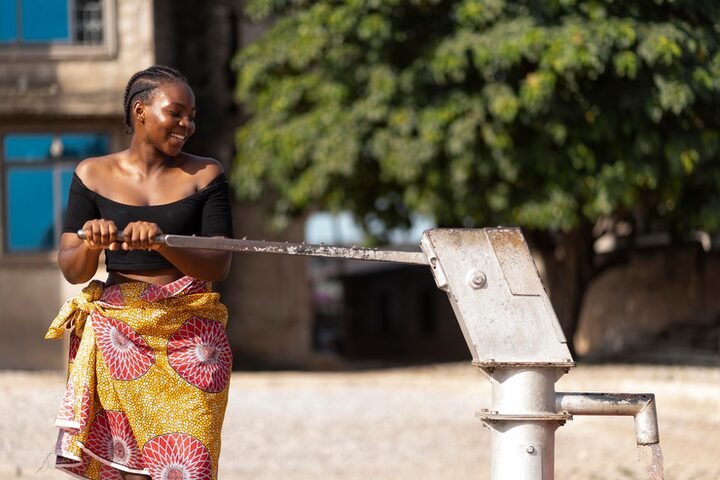
On the afternoon the water finally reached the first communal tap, there was no official ceremony. No ribbon. No visiting dignitaries. Mama Nafula simply placed her jerrycan under the spout and watched it fill in the time it once took her to walk halfway down the valley. Then she sat on a low stone, rested her forehead on her knees, and wept — not loudly, but with the deep release of someone who had been holding her breath for years.
Later, she told me, “I can plant my vegetables in the morning now and still have time to sit with my grandchildren when the sun goes down. That is wealth.”
The water did more than fill jerrycans. It returned hours. It restored possibility. Two of the younger mothers started a small soap-making group, using the reliable water as their foundation. A secondary-school student, watching the gravity-fed system take shape, later designed a rainwater-harvesting model that won a county science award. The village began to see itself differently — not as a place forever waiting for help, but as a place capable of shaping its own days.
Across Africa, millions of women still trade their mornings for water. The stories that travel furthest often speak only of need, of lack, of communities suspended in permanent crisis. What is told less often is the competence already present: the organisational skill, the deep local knowledge, the quiet determination that asks only for partnership rather than rescue.
When the water came to Kapsokwony, it did not arrive as a miracle. It arrived as the result of people who decided their time was worth reclaiming. In that choice lies one of the most important African stories of our time: the story of communities refusing to live inside narratives written for them, and instead writing their own — one pipe, one morning, one returned hour at a time.