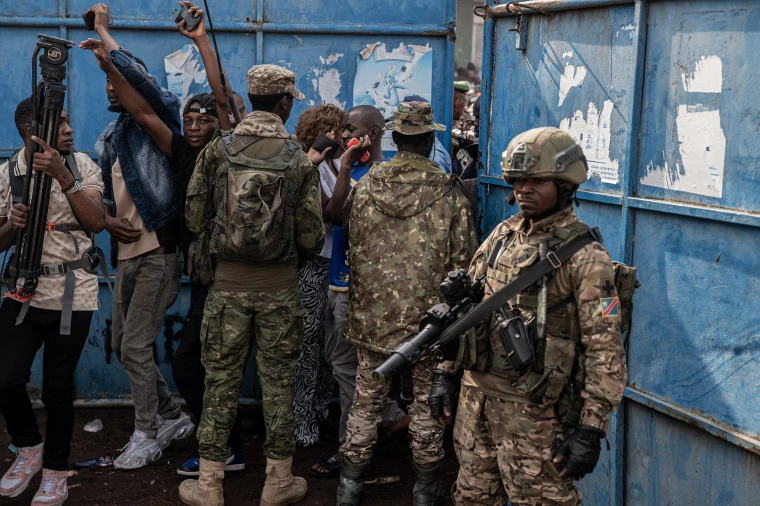
The UN human rights office (OHCHR) says it has received first-hand accounts indicating that at least 319 civilians were killed by M23 fighters in eastern Democratic Republic of Congo (DRC) within two weeks in July.
According to OHCHR, most of the victims — including at least 48 women and 19 children — were local farmers who had been camping in their fields during the planting season.
The killings come just weeks after two high-level peace initiatives had raised hopes of ending the conflict. However, those hopes have been shaken by renewed brutal attacks on civilians by armed groups, including the Rwandan-backed M23 militia.
UN High Commissioner for Human Rights, Volker Türk, condemned the “surge of deadly violence” despite a ceasefire agreement recently signed in Doha.
“I am appalled by the attacks on civilians by the M23 and other armed groups in eastern DRC amid continued fighting,” Mr. Türk said. “All attacks against civilians must stop immediately and all those responsible must be held to account.”
The massacre is among the deadliest since M23 — a group largely composed of Congolese Tutsi fighters formed over 15 years ago — began its current offensive.
On 19 July, the DRC government and M23 rebel leaders signed a peace agreement in Washington and the Doha Declaration, committing to a ceasefire and further talks. But humanitarian groups report that little has changed on the ground.
“I urge the signatories and facilitators of both the Doha and Washington agreements to ensure that they rapidly translate into safety, security and real progress for civilians,” Mr. Türk added.
The violence is worsening what the UN describes as one of the world’s most severe humanitarian crises. Over 7.8 million people are now internally displaced in eastern DRC — the highest figure on record — while 28 million face food insecurity, including nearly four million at emergency levels.
Adding to the strain, more than 30,000 refugees from South Sudan have fled into DRC’s Ituri province since April, escaping renewed fighting in Central Equatoria State.
The World Food Programme (WFP) has warned that funding shortfalls could soon force it to suspend lifesaving aid to hundreds of thousands. Health services are also under pressure, with 33 attacks recorded on health workers and facilities in the first half of 2025 — a 276% rise from the previous six months, according to the UN Population Fund (UNFPA).