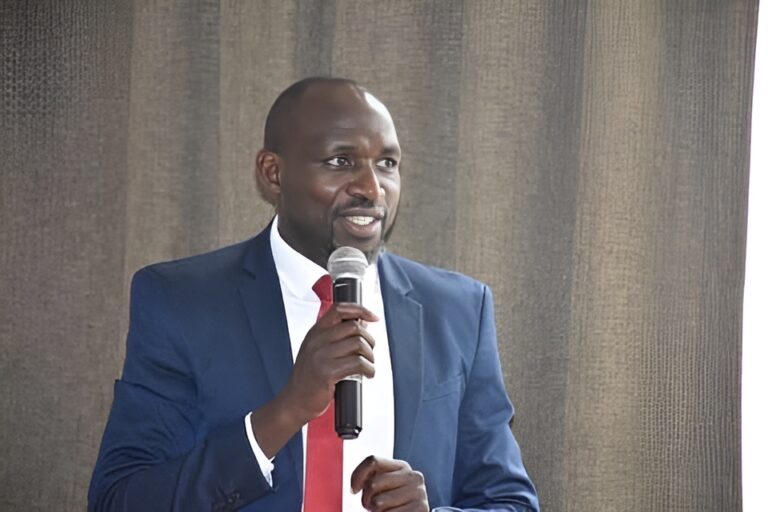
As Kenya looks towards the 2027 presidential election, presidential aspirant Professor Fred Ogola is advancing an economic vision that he says could create millions of jobs, expand investment opportunities and give ordinary citizens a greater stake in the country’s economic future.
At the centre of his proposal is Kenya Token, an initiative he presents as a vehicle for mobilising resources, investing in productive assets and generating employment, particularly for people at the bottom of the economic pyramid.
In an interview with Sueo TV, Ogola argued that Kenya’s most pressing challenges are economic rather than simply political, pointing to unemployment, corruption, weaknesses in the education system and what he described as poor economic and taxation policies.
“The Kenyan problem is economic. It’s not political. One term is not an economic solution. Two terms are not an economic solution,” he said, challenging the assumption that changing political leadership alone would resolve the country’s difficulties.
For Ogola, the debate about who occupies State House after the 2027 election should be accompanied by a more fundamental discussion about how Kenya generates wealth, creates employment and improves the livelihoods of its citizens.
Ogola’s proposed Kenya Token initiative is built around the idea of expanding access to investment opportunities beyond wealthy individuals and established business interests.
He argues that ordinary Kenyans, including those with limited financial resources, should have opportunities to participate in economic activities capable of generating jobs and improving household incomes.
To illustrate the scale of his ambition, Ogola suggested that creating 100,000 jobs in each county could generate approximately 4.7 million jobs nationally.
The projection represents an ambitious employment target, but it remains a claim made by Ogola rather than a demonstrated outcome. Its feasibility would depend on the initiative’s funding model, the sectors targeted for investment, the resources available and the sustainability of the jobs created.
Ogola indicated that the initiative was awaiting regulatory arrangements and that interested individuals could express their interest ahead of any token purchases.
The distinction between a proposed investment initiative and an operational, regulated programme is important. Before potential participants can assess its merits, questions surrounding its legal status, ownership, governance, investment risks and mechanisms for protecting participants need to be clearly addressed.
Further details would also be necessary to establish how funds would be raised, how investments would be selected, how employment targets would be calculated and how the benefits would reach the communities the initiative seeks to serve.
For a proposal promising employment on such a scale, transparency and independent scrutiny would be essential to establishing public confidence.
Ogola’s economic argument is also a criticism of the political divisions shaping Kenya’s presidential contest.
He questioned the tendency to frame the country’s future primarily around competing political camps, arguing that neither support for a one-term position nor advocacy for a two-term political arrangement constitutes an economic programme.
His criticism extends to politicians who challenge the government without presenting a sufficiently clear alternative for managing the economy.
Ogola said he was concerned with how the country was governed rather than with personal opposition to the president.
“The problem I have with him is how he’s governing the country, not him as a Kenyan,” he said. “He has no right to mismanage the country.”
He identified corruption, unemployment, weaknesses in education and economic and taxation policies as issues requiring attention. In his view, removing political leaders without addressing the systems and policies behind these challenges would not necessarily produce lasting change.
Ogola also questioned presidential hopefuls who say their economic vision is still being developed by a team or will be presented during a presidential debate.
He argued that voters should have an opportunity to understand a candidate’s economic philosophy well before election day. Using an analogy from relationships, he questioned whether someone seeking a partner would inspire confidence by saying that other people were still working on his vision.
He applied the same reasoning to presidential leadership, maintaining that candidates should communicate their policy direction early enough for citizens to examine their proposals and make informed choices.
His argument is that economic policy should not be an afterthought in an election campaign. Voters need to understand how candidates intend to address unemployment, public revenue, education, corruption and the broader conditions affecting household welfare.
Whether Ogola’s own economic vision can meet that standard will depend on the detail of his proposals and how clearly they translate into implementable policies.
Economic transformation beyond State House
Ogola has presented his economic ambitions as extending beyond his personal pursuit of the presidency.
He indicated that he intends to pursue his vision whether or not he becomes president, suggesting that national development should not depend entirely on who occupies the highest political office.
This position places the emphasis on the economic objectives he says Kenya needs to achieve rather than solely on electoral outcomes.
His proposed approach raises broader questions about how investment can be directed towards productive activities, how businesses can generate sustainable employment and how citizens with limited resources can participate in economic growth.
However, turning these objectives into measurable results would require a clear implementation framework, realistic financing arrangements and accountability mechanisms.
For Kenya Token specifically, the central questions remain how the initiative would operate, which productive assets it would support, what risks participants might face and how it would demonstrate that its activities generate additional, sustainable jobs.
These are important considerations for any initiative seeking public participation and promising economic benefits on a national scale.
Beyond economic policy, Ogola also spoke about the role of family in national leadership, arguing that the household is an important foundation for society.
He described State House as “the house of houses” and maintained that the president’s family should provide an example of how families can work together through difficulties.
Ogola cited former United States President Barack Obama and his wife, Michelle Obama, as an example of a family functioning as a unit. He also expressed concern about what he views as the normalisation of infidelity and family instability among Kenyan politicians.
“I believe that family is an important unit, and I believe that the devil should never win the war against a family,” he said, acknowledging that his own family also faces challenges.
His remarks reflect his belief that family stability deserves attention alongside economic and political questions. He argued that families should work through their difficulties and support one another, presenting the family as an important unit in building a healthier society.
These views add a personal and social dimension to his broader argument about leadership. They also raise questions about how family values, public conduct and the responsibilities of political leaders should be understood within the wider debate about national development.
Ogola’s proposals place employment, investment, accountability and family values at the centre of his vision for Kenya.
Yet the distinction between an ambitious vision and a workable programme remains critical. Kenya Token’s projected impact will depend on its financial structure, regulatory compliance, governance arrangements and ability to produce verifiable economic benefits.
Similarly, his broader criticism of Kenya’s political leadership points to issues that require detailed policy responses. Addressing unemployment, corruption, education and taxation would involve choices about public spending, investment, institutional accountability and the distribution of economic opportunities.
As the country approaches the 2027 election, Ogola’s position contributes to a wider debate about what citizens should expect from presidential candidates beyond campaign promises and political alliances.
His central argument is that Kenya’s economic future should be judged by its ability to create productive opportunities and improve people’s lives, rather than by the political personalities competing for office.
Whether Kenya Token becomes an effective instrument for that transformation remains to be demonstrated. Its significance will ultimately depend on the credibility of its model, the safeguards protecting participants and the measurable results it delivers for ordinary Kenyans.