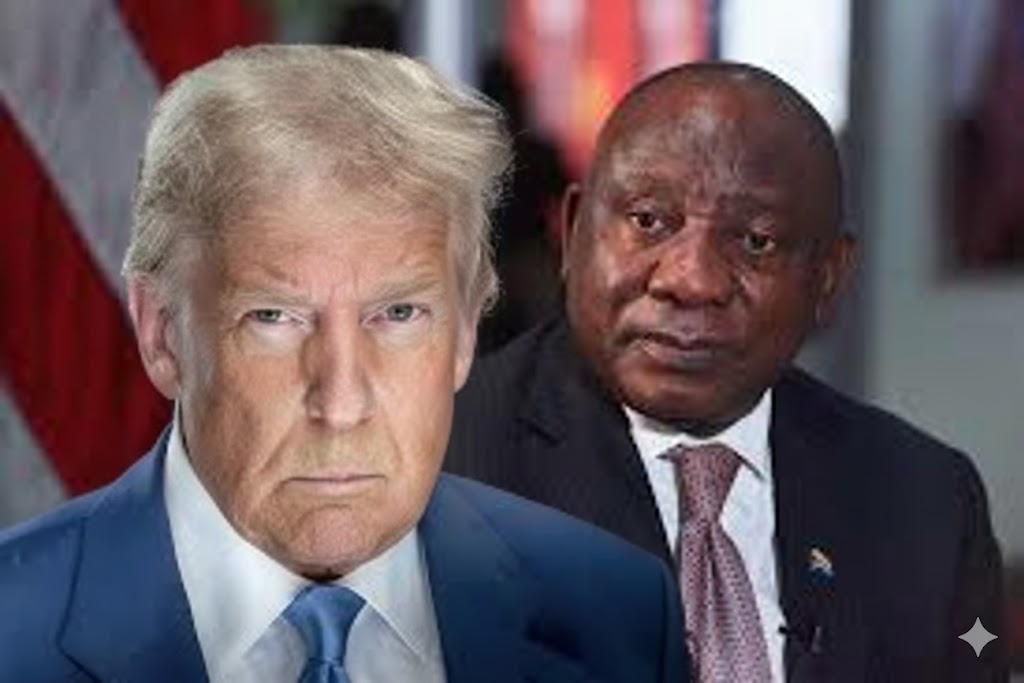
President Cyril Ramaphosa has described as “regrettable” the announcement by US President Donald Trump that South Africa will not be welcomed to the 2026 G20 Summit scheduled to take place in Miami, Florida.
Trump made the declaration on social media, claiming that South Africa refused to hand over the G20 presidency directly to a US embassy representative during the recently concluded Johannesburg summit. The United States had boycotted the historic gathering — the first G20 Summit ever held on African soil.
A Diplomatic Rift Reopens
South Africa formally transferred the presidency to the US at a low-key ceremony held at the Department of International Relations and Cooperation, following the absence of a US leader or senior official at the summit. Ramaphosa noted that the handover was conducted appropriately in line with G20 protocol, stressing that the country “is a member in its own right” and not subject to unilateral exclusion.
Trump’s public remarks, which included criticism of South Africa’s domestic policies and long-discredited claims about attacks on the country’s white minority population, have reignited diplomatic strain between the two nations. South Africa has consistently rejected such allegations as misinformation lacking credible evidence.
South Africa Stands Firm
Responding to Washington’s renewed pressure, South Africa’s presidency emphasized the country’s sovereignty and its commitment to multilateral cooperation. Officials expressed disappointment that efforts over the past year to rebuild the relationship with the US had not yielded progress.
South Africa also indicated that while the G20 operates as a membership body rather than an invitation-only forum, visa restrictions or other political measures could potentially be used to hinder participation in the 2026 summit. Even so, officials vowed to continue engaging other member states to protect the integrity of the G20 and ensure all countries retain equal standing.
Global Business Community Still Engaged
Despite political tensions, US businesses participated actively in the B20 (the business arm of the G20), where American and South African corporate representatives jointly endorsed commitments to deepen trade and investment collaboration. Analysts say this underscores the importance of economic ties between the two countries—even as political relations remain strained.
A Test for Multilateralism
The 2025 Johannesburg summit concluded with a unanimous declaration from all participating members—excluding the US, which did not attend—affirming stronger cooperation on global inequality, climate action and inclusive economic development.
As South Africa navigates the fallout from Washington’s latest stance, observers warn that the situation could influence future global alignments, trade relationships and the broader stability of multilateral forums.