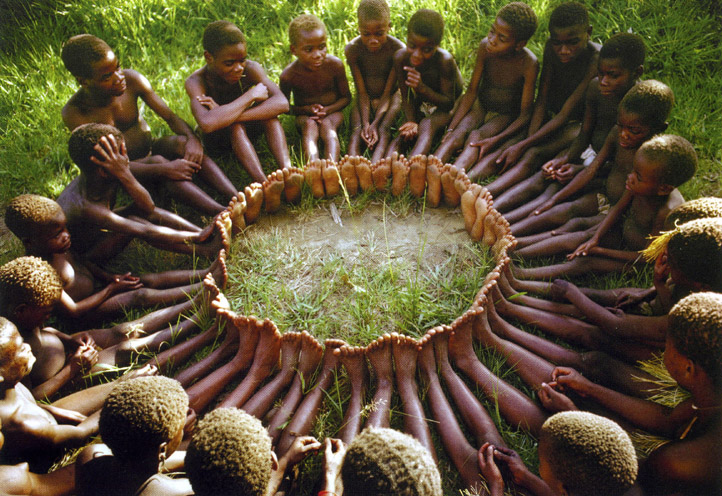
There is a beautiful tribe in Africa known as the Zulu people. This sect also known as Amazulu people are the largest population of South Africa,
Adeyemi Modupe Oluwayemisi
with their population estimated around 10-12 million people. The Zulus are also located in other African countries as, Lesotho, Eswatini, Botswana, Zimbabwe, Malawi, and Mozambique. This beautiful tribe is known for a philosophy that has caught across the Nations of the world: Ubuntu.
Ubuntu is an African philosophy that lays emphasis on ‘being human through other people’. It has been significantly reflected in the phrase; ‘I am because of who we all are.’ The philosophy of Ubuntu has been applied in theology by the likes of Archbishop Desmond Tutu, in politics by the likes of anti-apartheid icon, former South African President Nelson Mandela, and in management by the likes of Professor Lovemore Mbigi. Popularly, the Zulus say, *ubuntu ngumuntu ngabantu* which largely translates to I am human because we are and I am human because I belong. This means that in African philosophy, an individual is human if he or she says I participate, therefore I am.
Although Ubuntu is founded by the Zulus, the spirit of brotherhood is one that is portrayed largely in African cultures. All that Africans do is deeply entrenched in societal spirit and love in relationships. Something as simple as matrimony cannot be conducted successfully in a Nigerian home (where I belong) without carrying along every member of the couples’ families. It is strongly believed that if this is not done, the couple might release themselves to unknown curses that might plague them even to the third and fourth generations.
While my beliefs of God does not permit me to believe such extremities, we all do believe in the importance of the brotherhood in the success of any endeavor in life. My existence and success is only worth it when we all enjoy life together. I’ll take a look at some aspects of social life and how it affects the communal spirit in Africa.
FOOD
In a typical home in Africa, food is shared at the same time and can be eaten from the same plate. The irritation of eating habits is dealt with at the earliest stages of a child’s life so that we all learn that irrespective of our age and classes, it’s a taboo if you can’t feed with others in the same condition.
In the Yorùbá and Southern cultures of Nigeria where some meals are eaten slimy, the rule still stands. No one is permitted to be allergic to it. If any child is, he is trained to eat it more often so as to get used to it. That way, African homes build a strong dependence on communal feeding in their wards at a very early stage, making surviving alone difficult for the child even after he leaves home. That simple act’s influence is really deep such that wherever we are, we need others to be all that we need to be in life.
RELIGION
All the religious activities embraced in African societies must be done in the company of people. Any religion that preaches survival despite separation is a no go area for us. In churches, people are seen dancing in the company and holding hands maybe a little more than necessary sometimes. It is simply who we are.
The Ubuntu spirit though pagan enters into the most sophisticated religions. Anyone who wouldn’t integrate in a church is simply avoided and suspected as an unbeliever. If indeed you are a Christian, the way we know is that you agree to do all that we do with us. Together we are, divided we are not and we believe destruction looms when the latter is the case.
MARKET
The market system in Africa is always like very large fight scenes as too many people are seen conversing with too many people at the same time. This is the order of the day and it might not be changing anytime soon as we are more comfortable in that condition. Superstores, where things are done orderly and fewer people can transact at the same time, are considered thieves who extort too much from consumers and are hence left for the rich who have money to “throwaway”.
The market though rowdy holds a level of trust and love among sellers as they are seen trading side by side and mingling with buyers too. It seems as though no one is afraid that the other might be infectious or untrustworthy. The order of the market has been like that for as long as history would care to remember and we all seem fine with it.
The Ubuntu spirit governs even transactions. Eventually, the brotherhood loyalty is enjoyed even when the biggest deals are being struck.
DISCIPLINE
One would expect that the love a parent has for a child should make them exempt their child from the pain that comes with communal discipline, it’s never the case. When a child does what he shouldn’t, the rod of discipline can come from an older person close by and that’s how it is. That is how we grow up and nobody is allowed to be above this law. Very few parents have cuddled their children away from the communal discipline and they always have themselves to blame later on life as such children become a headache to themselves and the world at large.
Education and civilization haven’t undone this belief in our homes. Both a relative and passerby are expected to make contributions in the proper raising of children as they are either a blessing or a curse to us all in the long run.
Ultimately, the sons and daughters of Africa understand that we do not make society, society makes us. The existence of one is determined by the existence of all. This truth mentally governs every decision we make from the least to the greatest of us. Anyone who thinks otherwise is ostracized in relationships as a bad apple. This is who we are, the existence and success of the one are determined by the existence and success of all.