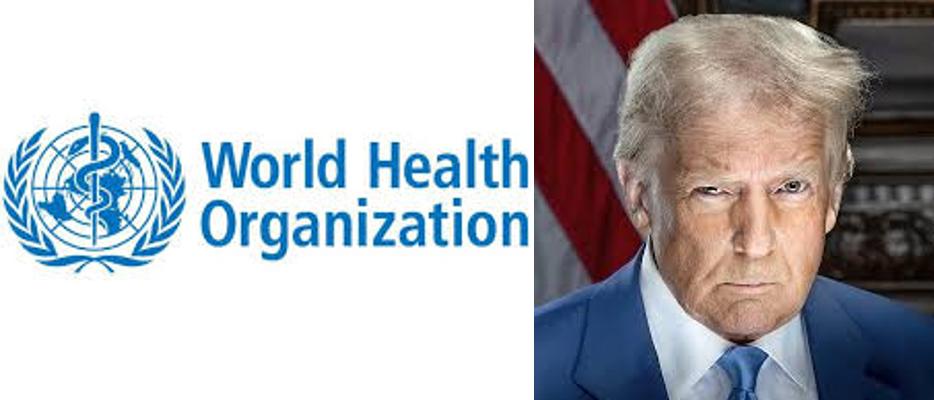
The World Health Organization (WHO) has expressed regret over a formal notification from the United States signaling its withdrawal from the agency, warning that the move could undermine global health security at a critical time.
As a founding member of WHO, the United States has played a significant role in several of the organization’s most notable achievements, including the eradication of smallpox and progress against public health threats such as polio, HIV, Ebola, tuberculosis, malaria, influenza, antimicrobial resistance, neglected tropical diseases, and food safety. WHO officials say the decision to exit “makes both the United States and the world less safe.”
The withdrawal notification is expected to be reviewed during the WHO Executive Board’s regular meeting scheduled for 2 February and debated further at the World Health Assembly in May 2026.
U.S. Accuses WHO of Failures; WHO Responds
In its public statements, the U.S. government accused WHO of compromising its independence and “tarnishing” the image of the United States. It also cited alleged failures in the organization’s response to the COVID-19 pandemic, including claims of withholding critical information.
WHO strongly rejected the accusations and defended its handling of the crisis, noting that while no government or institution responded perfectly to COVID-19, the organization acted “quickly, transparently, and on the basis of the best available evidence.”
According to WHO’s timeline, the agency requested additional information from China immediately after the first reports of “pneumonia of unknown cause” surfaced on 31 December 2019. Before the first reported fatality in early January 2020, WHO had already issued alerts, convened experts, and provided technical guidance to member states. By 30 January 2020, with fewer than 100 reported cases outside China and no fatalities, COVID-19 was declared a Public Health Emergency of International Concern — the highest alert under international health law.
Throughout the pandemic, WHO recommended public health measures such as vaccines, masks, and physical distancing but stressed it did not mandate lockdowns or impose national policies, saying such decisions remained the responsibility of sovereign governments.
Pandemic Reforms and International Health Law
Following independent evaluations of the pandemic response, WHO says it has undertaken reforms to strengthen preparedness and response systems for future emergencies. These include improvements in surveillance, global data-sharing, and coordinated response mechanisms that continue to operate 24/7.
In 2025, WHO Member States adopted the landmark WHO Pandemic Agreement — considered one of the most significant developments in global health law in decades. Negotiations are ongoing for the Pathogen Access and Benefit Sharing annex, intended to accelerate pandemic detection and ensure equitable access to vaccines, diagnostics, and treatments.
Neutrality and Geopolitical Claims
The U.S. also accused WHO of pursuing a “politicized, bureaucratic agenda” aligned with countries opposed to American interests. WHO rejected the allegations, reiterating its neutrality as a specialized United Nations agency governed collectively by 194 Member States.
The organization reaffirmed its constitutional mandate to support all nations in securing “the highest attainable standard of health” and stressed continued cooperation with global partners despite the U.S. exit.
Looking Ahead
While noting continued support from other Member States, WHO expressed hope that the United States will eventually return to active participation. For now, the organization says it remains focused on strengthening global health defenses at a time when transnational health threats — from pandemics to non-communicable diseases — require multilateral coordination more than ever.