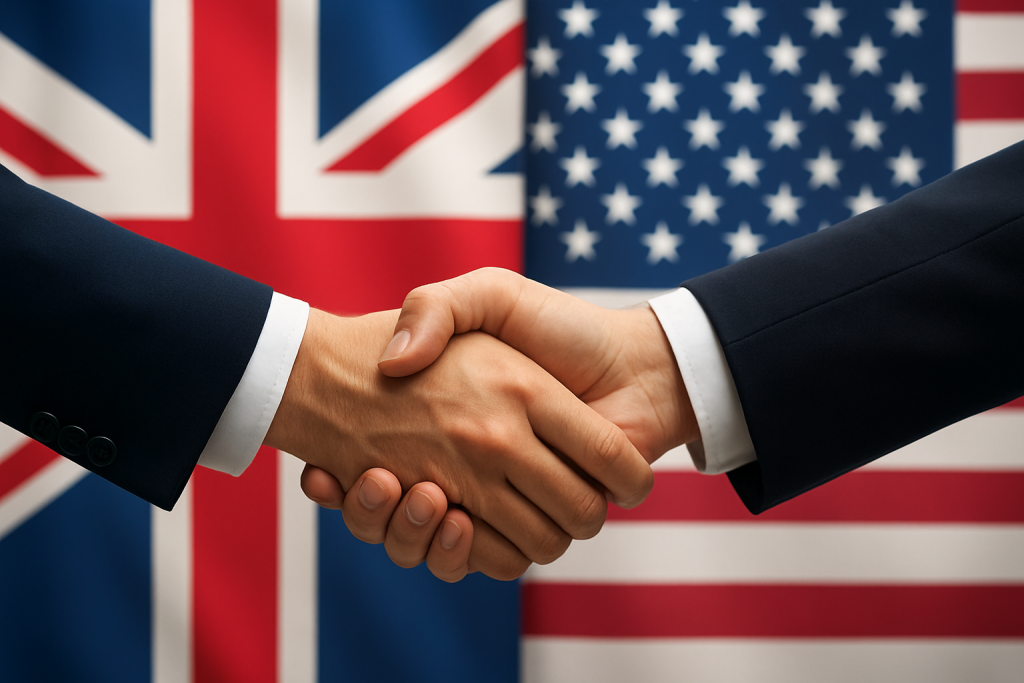
The United States and the United Kingdom have reached an agreement in principle on pharmaceutical pricing, a development officials say will correct long-standing cost imbalances and strengthen bilateral cooperation in life-sciences investment. The announcement was made jointly by the U.S. Department of Commerce, the Office of the United States Trade Representative, and the Department of Health and Human Services (HHS).
The new framework is part of the recently established U.S.–U.K. Economic Prosperity Deal (EPD), through which President Donald Trump and Prime Minister Keir Starmer aim to expand economic ties and enhance conditions for pharmaceutical companies operating in both countries.
A “Major Win” for U.S. Innovation and Workers
U.S. Commerce Secretary Howard Lutnick hailed the agreement as a breakthrough for the American innovation economy.
“Today’s agreement is a major win for American workers and our innovation economy,” he said. “We are strengthening supply chains, creating high-quality jobs, and reinforcing America as the world’s premier hub for life-sciences investment.”
Ambassador Greer of the USTR emphasized that the deal is designed to ensure fairness in global drug pricing.
“For too long, American patients have been forced to subsidize prescription drugs in other developed countries,” she said. “This negotiated outcome will help drive investment and innovation in both countries.”
Key U.K. Commitments
Under the terms agreed in principle, the United Kingdom will:
-
Increase the net price it pays for new, innovative medicines by 25%, reversing a decade-long decline in NHS spending on life-saving drugs.
-
Prevent the higher prices from being eroded by broad concessions or rebates under the Voluntary Scheme for Branded Medicines Pricing, Access and Growth (VPAG).
-
Reduce the VPAG repayment rate to 15% in 2026 and maintain it at or below that level for the remainder of the scheme.
These commitments are expected to boost incentives for pharmaceutical innovation and improve patient access to next-generation therapies across the U.K.
U.S. Concessions Under the Agreement
In exchange, the United States will:
-
Exempt U.K.-origin pharmaceuticals, pharmaceutical ingredients, and medical technology from Section 232 tariffs.
-
Avoid initiating Section 301 investigations into U.K. drug pricing practices during President Trump’s term.
-
Support expanded access for U.K. citizens to advanced pharmaceutical breakthroughs.
Chris Klomp, Director of Medicare at the Centers for Medicare & Medicaid Services and a lead negotiator, said the agreement builds on the administration’s efforts to lower drug costs for U.S. consumers.
“When nations fairly share the burden of producing and paying for life-saving medicines, every citizen gains,” he said.
Strengthening Global Pharmaceutical Policy
Health and Human Services Secretary Robert F. Kennedy, Jr. described the agreement as a landmark achievement in global pharmaceutical policy.
“Americans should not pay the world’s highest drug costs for medicines they helped fund,” he said. “This agreement brings long-overdue balance to U.S.–U.K. pharmaceutical trade.”
The agreement signals a deeper phase of cooperation between Washington and London in the life-sciences sector, with implications for global drug pricing, research collaboration, and supply-chain security.
Source:
U.S. Department of Commerce – Office of Public Affairs (publicaffairs@doc.gov);