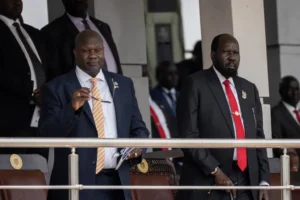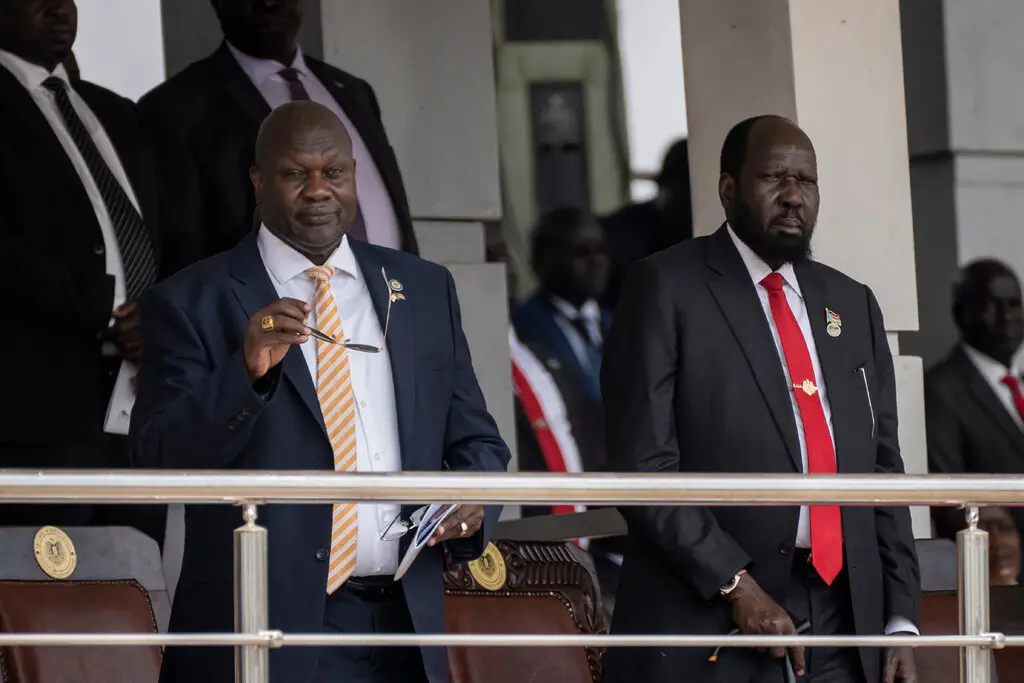
South Sudan, the world’s youngest nation, is once again at a critical crossroads as escalating tensions between President Salva Kiir and his former rival-turned-ally, Riek Machar, threaten to unravel years of fragile peace. The political crisis has not only put South Sudan at risk of renewed violence but has also raised concerns over regional stability and foreign intervention.
The United Nations Mission in South Sudan (UNMISS) has warned that the country could lose the “hard-won gains of the past seven years” if it returns to widespread conflict. “The country’s leaders stand on the brink of relapsing into war,” UNMISS said in a statement, emphasizing the urgent need for de-escalation.
Foreign Involvement and Regional Risks
A key concern emerging from the crisis is the role of foreign forces in South Sudan’s internal political struggles. The UN Commission on Human Rights in South Sudan has reported the presence of Ugandan troops and battle tanks in the country, deployed at the request of President Kiir. This has sparked fears of a broader regional conflict, as foreign military involvement could potentially violate the UN arms embargo and complicate efforts to maintain peace.
The international community has taken swift action, with the United States, the United Kingdom, and Norway urging South Sudan’s leaders to exercise restraint. The US has specifically called for Machar’s release from what has been described as house arrest, warning that continued political suppression could lead to further destabilization. Meanwhile, Germany and Norway have shut down their embassies in Juba, and other Western nations are scaling down diplomatic operations due to security concerns.
The Fragile Peace Deal in Jeopardy
The tensions stem from longstanding political and ethnic divisions that have plagued South Sudan since its independence in 2011. In 2018, Kiir and Machar signed the Revitalized Peace Agreement to end a civil war that claimed nearly 400,000 lives. However, relations between the two leaders have remained strained, with sporadic violence continuing in various parts of the country.
This week’s developments, including clashes between government forces and a rebel faction in Upper Nile State, as well as reports of barrel bombs being used in airstrikes, indicate a dangerous shift towards full-scale conflict. SPLM/IO deputy leader Oyet Nathaniel Pierino has warned that Machar’s reported detention signals “the collapse of the peace agreement,” urging international and regional bodies to intervene before the situation spirals further.
Diplomatic Efforts to Contain the Crisis
In response to the growing unrest, the African Union and the Intergovernmental Authority on Development (IGAD) are dispatching high-level delegations to Juba in an attempt to mediate and prevent an escalation into war. However, with tensions running high and heavy military presence reported in the capital, achieving a peaceful resolution remains a daunting challenge.
Civil society leaders and peace advocates have voiced deep concerns over the potential for increased violence. Edmund Yakani, a prominent civil society figure, has warned that if the situation is not resolved urgently, South Sudan could face “a more deadly and violent” conflict than before, fueled by political rivalries and ethnic divisions.
What Lies Ahead for South Sudan?
As the crisis unfolds, the international community faces the difficult task of balancing diplomatic pressure with the realities on the ground. With a history of unresolved grievances and a fragile governance structure, South Sudan’s future remains uncertain. The coming days will be crucial in determining whether the country can step back from the brink of war or plunge into another devastating conflict.
For now, all eyes are on Juba, where the actions of political leaders and the effectiveness of diplomatic interventions will shape the fate of not only South Sudan but also the broader stability of the East African region.