A damning new report by Amnesty International has revealed that fossil fuel operations around the world pose a direct threat to nearly a quarter of the global population — an estimated two billion people living within five kilometres of oil, gas, and coal projects.
Published by The Guardian UK and based on first-of-its-kind research, the report, titled “Extraction Extinction: Why the Lifecycle of Fossil Fuels Threatens Life, Nature, and Human Rights,” exposes the staggering human and environmental cost of the fossil fuel industry.
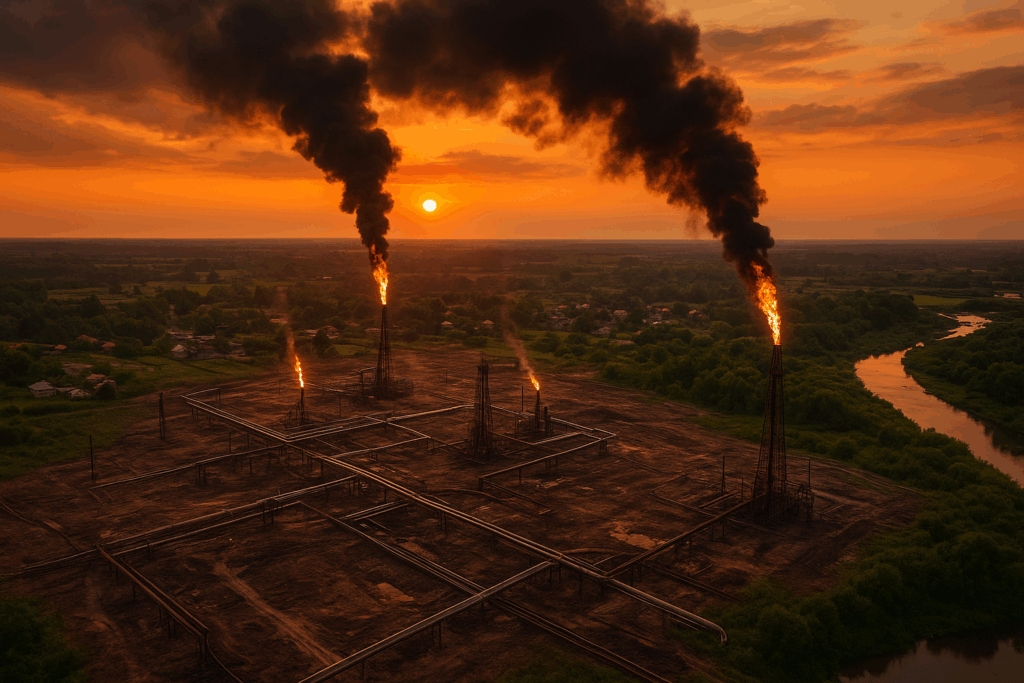
Researchers mapped more than 18,300 fossil fuel sites spread across 170 countries, finding that proximity to these facilities — including drilling wells, pipelines, refineries, and processing plants — heightens the risk of cancer, respiratory and heart diseases, premature birth, and death. The operations also degrade land, poison water supplies, and foul the air.
According to the findings, almost 463 million people, including 124 million children, live within one kilometre of fossil fuel sites. With over 3,500 new projects under construction or in the pipeline, another 135 million people could soon face exposure to dangerous flares, leaks, and toxic spills.
“Under the guise of economic growth, the fossil fuel industry has served greed and profits without red lines, violated rights with impunity, and destroyed the atmosphere, biosphere, and oceans,”
— Agnès Callamard, Secretary General, Amnesty International.
Communities as Sacrifice Zones
The report highlights how entire regions have become “sacrifice zones” — pollution hotspots where low-income and marginalised communities bear the brunt of environmental degradation. Many of these areas, rich in biodiversity, are now heavily contaminated and stripped of livable conditions.
A third of all active oil, gas, and coal projects overlap with critical ecosystems such as forests, wetlands, and rivers that play vital roles in carbon storage and ecological balance. Yet, due to incomplete documentation and weak data systems, researchers warn that the true global scale may be even higher.
Disproportionate Burden on Indigenous Peoples
Indigenous communities, representing only 5 per cent of the world’s population, are among those most affected — with one in six fossil fuel sites located on Indigenous lands. The report details widespread land grabs, cultural losses, community divisions, and violence targeting activists and local leaders opposing new projects.
Field testimonies gathered from Indigenous land defenders in Canada, fishers in Colombia and Brazil, and Amazonian leaders in Ecuador reveal a pattern of environmental injustice and systemic racism in fossil fuel expansion.
A Call for Urgent Action
The report’s release coincides with the 30th annual climate negotiations (COP30) in Belém, Brazil, where world leaders — excluding the United States, the largest historical emitter of greenhouse gases — are under pressure to accelerate the global phase-out of fossil fuels.
Amnesty International’s Secretary General, Agnès Callamard, urged negotiators to place people before profits, saying:
“COP30 leaders must commit to a full, fast, fair, and funded fossil fuel phase-out and a just transition to sustainable energy for all.”
Last week, The Guardian also reported that more than 5,350 fossil fuel lobbyists have attended UN climate talks in the past four years — a revelation that underscores the powerful grip of the industry on global climate policy.
The Human Cost
The UN Special Rapporteur on Climate Change has warned that fossil fuels impact nearly every part of the human body, posing especially grave risks to children, pregnant women, and the elderly. The rapporteur has also called for criminal penalties against those spreading climate disinformation and for a total ban on fossil fuel lobbying and advertising.
“The climate crisis is a manifestation and catalyst of deep-rooted injustices. The age of fossil fuels must end now,”
— Agnès Callamard.