For many families, the journey to parenthood does not begin with joy. It begins with questions, uncertainty, and, often, cost. Across the world, fertility care remains one of the most expensive and emotionally demanding areas of healthcare, placing it out of reach for many who need it most.
Yet, quietly, a shift is underway.
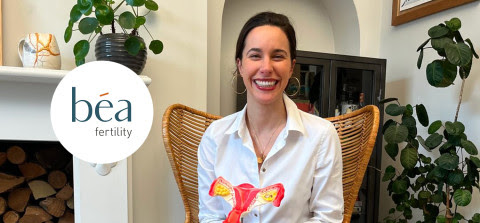
In the United Kingdom, Angel Academe has invested in Béa Fertility, a company working to bring clinical-grade fertility treatment into the home. The investment, made through Angel Academe EIS Fund I, reflects a growing belief that fertility care does not always have to happen within the walls of a clinic.
For decades, the options available to those trying to conceive have existed at two extremes. On one end is timed intercourse, guided more by hope than precision. On the other is in vitro fertilisation, a complex medical procedure that can cost over £5,000 per cycle and often requires multiple attempts. Between these two points, there has been little.
Béa Fertility is attempting to occupy that space.
Its at-home treatment kit is designed to offer a clinically guided alternative that increases the chances of conception without requiring invasive procedures. According to the company, users who completed up to three treatment cycles recorded a 39.28 percent pregnancy rate. Beyond the numbers, however, lies something more significant — the possibility of choice.
Founded by Tess Cosad, the company was built to address a gap that many had experienced but few had solved. Fertility, in reality, is not a uniform journey, and neither are the people who navigate it. Béa’s approach reflects this. Its treatment is designed not only for heterosexual couples, but also for LGBTQ+ families, single women using donor sperm, and individuals for whom traditional intercourse is not an option. In doing so, it acknowledges a broader, more inclusive definition of family.
Investor confidence in that vision has grown steadily. Since its early backing in 2020 by Angel Academe at a valuation of £2.25 million, the company has increased in value more than eightfold. It has also attracted support from firms such as Octopus Ventures, 7percent Ventures, JamJar Investments, Forward Partners, Calm/Storm Ventures, and QVentures — a signal that the market is paying attention to solutions that blend accessibility with clinical credibility.
For Sarah Turner, this is precisely the kind of company the fund was created to support: one that addresses a real need with a solution grounded in evidence. Graham Schwikkard, whose organisation manages the fund, sees it as part of a broader shift toward backing female founders solving complex global challenges, particularly in healthcare.
But for Béa Fertility, the work is just beginning.
Currently available in the UK, the company is preparing for expansion into the United States following regulatory clearance. At the same time, it is conducting what it describes as the world’s largest study into at-home fertility treatment, with findings being presented at international conferences. These steps suggest a company positioning itself not only as an alternative, but as a new standard.
At its core, however, this story is not about investment rounds or valuations. It is about agency. By offering a treatment that costs a fraction of IVF — roughly one-tenth — Béa Fertility is attempting to return a measure of control to individuals navigating one of the most personal journeys of their lives.
In a world where access to healthcare is often shaped by income, geography, and circumstance, such efforts carry weight. They do not simply introduce new technology; they quietly reshape who that technology is for.