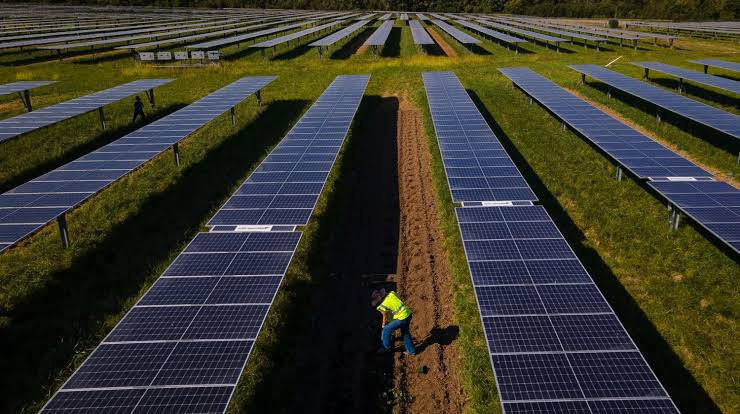
In the face of growing global energy demand and the ongoing threat of climate change, the world is witnessing an urgent push toward renewable energy solutions. Among these, solar power has emerged as one of the most promising. However, solar installations often require large tracts of land, which can create a conflict with agriculture, particularly in regions where arable land is already scarce. Agri-voltaics offers a compelling solution to this challenge. By integrating photovoltaic (PV) panels with traditional agricultural practices, agri-voltaics maximizes land use efficiency and fosters a symbiotic relationship between food and energy production.
What is Agri-Voltaics?
Agri-voltaics refers to the co-location of agricultural crops and solar photovoltaic systems on the same plot of land. Rather than viewing farmland and solar farms as competing land uses, this model envisions a cooperative approach. Solar panels are strategically installed to allow crops to grow underneath or between them, creating a dual-use system that supports both agricultural productivity and renewable energy generation.
This approach is gaining popularity in countries like Japan, Germany, France, India, and the United States. Innovations in solar panel design, tracking systems, and crop management techniques are helping to refine agri-voltaic systems to suit different climates, crop types, and farming practices.
The Science Behind the Synergy
The effectiveness of agri-voltaics lies in the mutual benefits it provides to both agriculture and energy production. Crops grown under solar panels can benefit from partial shading, which helps reduce heat stress and conserve water by lowering evaporation rates. In turn, the cooler microclimate beneath the panels can improve the efficiency of solar cells, which tend to operate more effectively at lower temperatures.
Several studies have shown that certain crops—such as lettuce, spinach, tomatoes, and herbs—can thrive in agri-voltaic settings. In hot climates, where direct sunlight can damage delicate crops, the shade provided by solar panels can even lead to increased yields.
Moreover, the water saved by growing crops in partially shaded environments can be significant. In arid and semi-arid regions, where water scarcity is a pressing issue, agri-voltaics offers a sustainable solution that conserves vital resources while maintaining agricultural output.
Technological Innovations in Agri-Voltaics
Agri-voltaic systems have evolved significantly since their inception. Modern implementations often include:
Elevated PV Structures: Panels are mounted several meters above the ground to allow space for farming machinery and crops.
Adjustable and Tracking Panels: These panels can tilt or rotate to optimize sunlight capture while adjusting shading for crops as needed.
Semi-Transparent Panels: These allow some sunlight to filter through, making them ideal for light-loving crops that require diffused light.
Smart Monitoring Systems: Integrated sensors and AI-based platforms monitor soil moisture, temperature, and solar output to optimize the combined farming and energy process.
These innovations enable farmers and energy producers to fine-tune their operations, increasing efficiency and sustainability.
Economic and Social Benefits
Agri-voltaics can be an economic game-changer for rural communities. By creating an additional revenue stream from solar energy, farmers can stabilize their income and reduce their reliance on unpredictable crop yields. In some cases, governments and private developers offer land lease agreements or direct payments to farmers hosting solar panels, providing a reliable source of revenue over 20 to 30 years.
Furthermore, agri-voltaics can stimulate local job creation through the construction, operation, and maintenance of solar installations. Educational institutions and research centers can also benefit by using these systems as living labs to study renewable energy, climate-resilient agriculture, and land management.
Socially, agri-voltaics promotes energy equity by expanding access to clean electricity in remote or off-grid farming communities. This can improve local standards of living, support rural electrification, and reduce dependency on fossil fuels.
Environmental Impact and Climate Resilience
Agri-voltaics enhances climate resilience in multiple ways. It mitigates the environmental impacts of conventional energy production by reducing greenhouse gas emissions and land degradation. By conserving water and reducing heat stress on crops, it helps maintain agricultural productivity in the face of climate extremes like droughts and heatwaves.
Additionally, agri-voltaic systems often integrate biodiversity features such as pollinator-friendly vegetation and wildlife corridors, making them more ecologically harmonious than traditional solar farms.
By maximizing land use and promoting sustainable practices, agri-voltaics aligns with the United Nations Sustainable Development Goals (SDGs), including those related to clean energy, food security, climate action, and sustainable land use.
Challenges and Considerations
Despite its benefits, agri-voltaics is not without challenges. Key concerns include:
Initial Costs: Installation of elevated or tracking solar systems can be significantly more expensive than standard ground-mounted arrays.
Crop Compatibility: Not all crops are suitable for agri-voltaic environments. Research and adaptation are necessary to match the right crops with the right solar configurations.
Technical Expertise: Farmers may require training and technical support to manage dual-use systems effectively.
Policy and Regulation: In many countries, land-use regulations and energy policies have not yet caught up with the concept of agri-voltaics. Clear frameworks and incentives are needed to encourage widespread adoption.
Addressing these challenges will require cooperation between governments, research institutions, the private sector, and farming communities.
The Future of Agri-Voltaics
The global potential for agri-voltaics is immense. According to a study by the Fraunhofer Institute for Solar Energy Systems, converting just 1% of global agricultural land to agri-voltaic systems could generate enough electricity to meet global energy demands while still allowing for food production.
As the technology matures and awareness grows, agri-voltaics could become a cornerstone of sustainable development strategies, particularly in regions grappling with food insecurity, land degradation, and energy poverty.
Innovative projects are already emerging across Africa and Asia, demonstrating how agri-voltaics can be tailored to local needs. For example, in Kenya and India, solar panels are being used to power irrigation systems while shading crops, boosting yields and improving water efficiency simultaneously.
Governments, NGOs, and development agencies are beginning to recognize agri-voltaics as a viable tool to address multiple development goals at once.
Hence, agri-voltaics represents a powerful convergence of technology, sustainability, and agricultural tradition. By reconciling the need for clean energy with the need for food production, it offers a practical and inspiring solution to some of the most pressing global challenges of our time.
As we move toward a future where land resources are under increasing pressure, agri-voltaics reminds us that innovation doesn’t always require new territory—it often requires new perspectives. With the right investment, policy support, and community engagement, agri-voltaics could illuminate a path toward a greener, more resilient world.