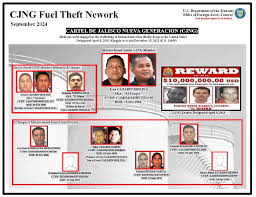
In a bold move to stem the flow of deadly synthetic opioids and disrupt transnational organized crime, the United States has sanctioned a Mexico-based criminal network tied to the notorious Cartel de Jalisco Nueva Generación (CJNG). The group, accused of trafficking fentanyl—a synthetic opioid that has become the leading cause of death for Americans aged 18 to 49—is also allegedly involved in fuel theft and crude oil smuggling across the U.S.–Mexico border.
The U.S. Treasury Department announced sanctions against three Mexican nationals and two entities operating in Mexico, describing the network as a major revenue generator for CJNG. The cartel, recently designated a Foreign Terrorist Organization (FTO) and a Specially Designated Global Terrorist (SDGT), is estimated to earn hundreds of millions of dollars annually from its criminal ventures.
These sanctions were enacted under Executive Orders 14059 and 13224, aimed at countering global narcotics trafficking and terrorism financing. The U.S. Department of State has also issued a reward of up to $15 million for information leading to the arrest or conviction of CJNG’s co-founder and leader, Nemesio Rubén Oseguera Cervantes, also known as “El Mencho.”
The crackdown is part of broader U.S. efforts to combat the fentanyl crisis, which has had devastating public health consequences and reverberated across borders. Officials stress that CJNG’s activities—including energy-related crimes such as fuel theft and crude oil smuggling—highlight the dangerous intersection between narco-terrorism and global energy insecurity.
While primarily a North American issue, the ripple effects of such organized criminal activity are felt globally. For African nations, where cross-border trafficking, weak enforcement, and rising youth addiction trends are growing concerns, the U.S. action underscores the importance of international cooperation and proactive drug policy enforcement.
This move also reflects ongoing global conversations around the need for multilateral strategies to tackle the convergence of drug trafficking, terrorism financing, and illicit trade in energy resources—areas that increasingly pose risks to political and economic stability worldwide.
For more details, readers are encouraged to consult the full press release from the U.S. Department of the Treasury and Financial Crimes Enforcement Network.