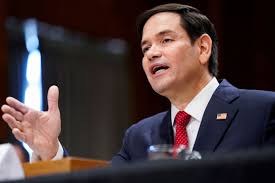
In a decisive address to the media at Le Bourget Airport in Paris, U.S. Secretary of State Marco Rubio emphasized the urgency of ending the Ukraine war, describing it as a conflict that, while tragic, is “not America’s war.” Rubio, who has been leading diplomatic efforts alongside key U.S. and European allies, stated that the United States is committed to facilitating peace — but only if tangible progress can be achieved quickly.
“We didn’t start it. We’ve been helping Ukraine for over the last three years, and we want it to end. But it’s not our war,” Secretary Rubio said. He added that President [name] had dedicated “87 days at the highest level” attempting to broker peace, signaling that patience is running out.
Rubio confirmed that a preliminary framework for a ceasefire has been shared with both Ukrainian and Russian officials, although he declined to disclose specifics. “When you start negotiating these things through the media, they fall apart,” he cautioned, noting that the current focus is to determine — within days, not weeks — whether a durable peace is achievable.
In meetings held in Paris, senior U.S., French, British, and German officials engaged in outlining potential next steps. Rubio praised European contributions, stating they were “very constructive and helpful,” and hinted at a follow-up meeting early next week, possibly in London.
Addressing concerns about Ukraine’s future security, Rubio acknowledged that “security guarantees” were part of the discussions but stressed that detailed agreements would come later. “Ukraine will have a right to defend itself and enter into whatever agreements it wants to enter into,” he said, reaffirming the U.S. stance on Ukraine’s sovereignty.
The Secretary was firm that the U.S. would not allow negotiations to drag on indefinitely. “If they’re serious about peace — either side, or both — we want to help. If not, we’re going to move on to other priorities,” Rubio said, listing global security challenges, including the threat from Iran, as pressing concerns.
Asked about talks with Russian Foreign Minister Sergey Lavrov, Rubio explained that he communicated directly to avoid “relying on rumors,” maintaining that open channels are critical given the long diplomatic freeze between Washington and Moscow.
Rubio also briefly addressed Iran’s nuclear ambitions, noting that Tehran’s behavior is increasingly alarming and hinting at looming decisions on reimposing sanctions. “Iran will not have a nuclear weapon,” he reiterated firmly, aligning with the President’s declared red line.
As the world watches the fast-moving developments, Secretary Rubio made clear: peace is the goal — but not at any cost, and not without swift and serious commitments from all sides involved.