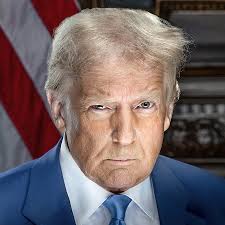
United States President Donald Trump has announced that he has ordered the Department of Defense to “immediately” resume nuclear weapons testing to ensure parity with other global nuclear powers.
The move marks a significant shift in US defense policy and comes amid rising global tensions. Trump made the announcement on Thursday via his Truth Social platform, just hours before meeting Chinese President Xi Jinping during the Asia-Pacific Economic Cooperation (APEC) summit in Busan, South Korea.
“I have instructed the Department of War [Department of Defense] to start testing our Nuclear Weapons on an equal basis. That process will begin immediately,” Trump wrote, adding that the decision was prompted by “other countries’ [nuclear] testing programs.”
While the US president did not clarify whether his directive refers to nuclear-explosive testing or missile testing, defense analysts say the decision could reignite an arms race reminiscent of the Cold War era.
Nuclear Parity and Global Reactions
According to the Stockholm International Peace Research Institute (SIPRI), China’s nuclear stockpile has grown rapidly to about 600 warheads, adding roughly 100 per year since 2023. The Pentagon projects that Beijing could possess over 1,000 operational nuclear warheads by 2030.
The Center for Arms Control and Non-Proliferation (CACNP) estimates Russia’s nuclear arsenal at 5,459 warheads, while the US holds approximately 5,550, with 3,800 actively deployed.
The United States last conducted a nuclear test in 1992, following a 1991 moratorium introduced by former President George H. W. Bush after the Soviet Union’s collapse. Only India, Pakistan, and North Korea have conducted nuclear tests since 1996, when the Comprehensive Nuclear-Test-Ban Treaty (CTBT) was opened for signatures.
South Korea to Build Nuclear-Powered Submarine
In another major announcement, Trump said he had approved US support for South Korea to develop its own nuclear-powered submarine, describing the project as a strategic upgrade from the country’s existing diesel-powered fleet.
He revealed that the submarine would be built in Philadelphia, Pennsylvania, in collaboration with the South Korean shipbuilder Hanwha.
South Korean President Lee Jae Myung reportedly urged Trump to revise their countries’ nuclear energy agreement to allow Seoul greater autonomy in reprocessing spent nuclear fuel and enriching uranium — both currently restricted under the bilateral accord.
Lee clarified that the request focused on securing fuel for propulsion, not weapons.
“If fuel supply is permitted, we can build several submarines equipped with conventional weapons using our own technology to defend the waters around the Korean Peninsula,” he said, emphasizing the project’s defensive intent.
The move would admit South Korea into an elite group of nations operating nuclear-powered submarines, including the US, China, Russia, the UK, France, and India.
Strategic Implications
Trump’s dual announcement — restarting US nuclear testing and backing Seoul’s nuclear-powered submarine project — underscores a shift toward assertive deterrence in US foreign policy.
Analysts warn the developments could strain relations with China and Russia while reshaping the strategic balance in the Asia-Pacific region.
Source: Agencies, Reuters, and official statements.