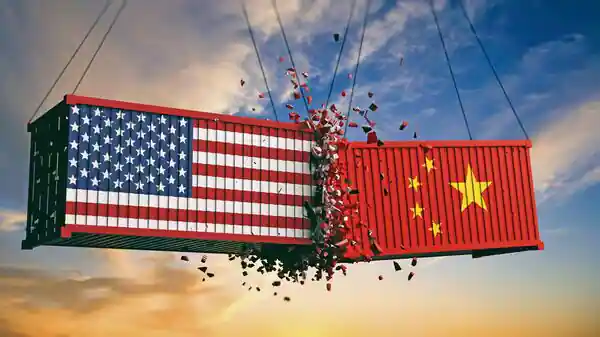
President Donald Trump declared that the United States is determined to secure a “fair deal” with China, despite a spiraling trade war that now threatens to freeze trade between the world’s two largest economies.
In a statement to reporters at the White House, Trump attempted to strike a more conciliatory tone amid economic uncertainty triggered by his administration’s aggressive tariff strategy. Yet, behind the rhetoric, tensions have only intensified.
As of April 2, 2025, the U.S. has raised tariffs on Chinese imports to a staggering 145%, prompting an equally forceful 125% retaliatory tariff from China, implemented on April 12. The Chinese Ministry of Commerce has since declared that any further U.S. tariffs will be “ignored,” stating that the American market has become virtually unviable at current trade levels.
Experts warn that the fallout from the latest escalation could result in a 0.2% drop in global merchandise trade, further compounding inflationary pressures and shaking investor confidence.
Anna Ashton, a former director at the U.S.-China Business Council, criticized the administration’s unpredictability, stating that “wild swings in commitment make it highly unlikely that President Xi Jinping will engage in meaningful negotiations.”
The tariff war began in early 2018 under Trump’s first term, with claims that China engaged in intellectual property theft and unfair trade practices. While a phase-one agreement was reached in 2020, it failed to produce lasting peace.
Although President Joe Biden maintained some tariffs during his term and added new ones on electric vehicles and solar panels, the second Trump administration has doubled down. Since February 2025, tariffs have steadily climbed—jumping by 10% in February and another 10% in March—before reaching today’s historic highs.
China’s latest response includes a 15% tariff on U.S. agricultural products, further endangering American farmers and exporters. Despite short-term economic pain, President Trump insists the pressure will pay off in the long run.
With the trade war once again dominating headlines, global markets remain on edge. Observers warn that unless cooler heads prevail, the tariff tit-for-tat could shift from economic sparring to long-term trade decoupling.