Kaduna: The Epicentre of Northern Nigeria’s Industrial and Political Transformation (1958–1966)
From Lugard’s early vision to Ahmadu Bello’s Northernization agenda, Kaduna transformed into the beating heart of Northern Nigeria—an industrial hub, a political headquarters, and a melting pot of cultures whose influence shaped the region for decades.
By Paul Nkom Yashim
Adapted from his academic research work.
Why Kaduna? Lugard’s Strategic Vision
When Sir Frederick Lugard selected Kaduna in 1912 as the capital of Northern Nigeria, it was not a random choice. Several strategic considerations shaped his decision:
-
Its location provided equal proximity to the major emirates.
-
The River Kaduna offered essential water access for administrative and economic use.
-
The expanding railway network connected Kaduna to the South and to the northern trade routes.
-
Unlike older emirate cities such as Zaria and Kano, Kaduna was free from entrenched political power structures, allowing the colonial government to create a fresh administrative centre.
This gave Kaduna a unique advantage: it became the launchpad for new policies, new institutions, and—by the late 1950s—the new Northern political identity.
Northernization Meets Industrialization
Under the leadership of Sir Ahmadu Bello, the Sardauna of Sokoto, Kaduna evolved far beyond its colonial roots. His economic strategy linked the Northernization policy with a bold plan for industrial self-reliance.
Key Northern policies that drove Kaduna’s rise included:
-
Aggressive promotion of import-substitution industries
-
Expansion of industrial zones in Kakuri, Makera, and Kudenda
-
Joint investments by the Northern Regional Government and international partners
-
Establishment of agencies that supported Northern-owned businesses and technical skill development
Major industries that defined Kaduna’s economic boom:
-
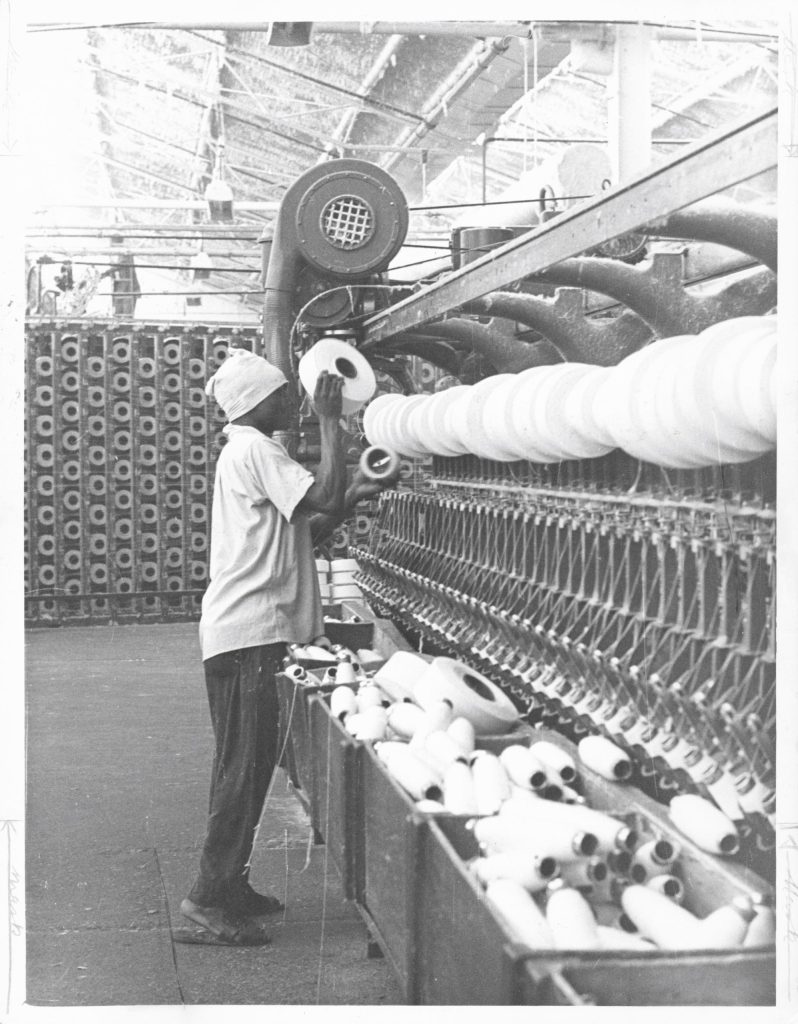
Kaduna Textiles Limited (KTL) – one of the largest textile mills in West Africa
-
Arewa Textiles – strengthening the region’s cotton-to-fabric value chain
-
Peugeot Automobile Nigeria (PAN) – a landmark automobile assembly plant
-
Nigeria Breweries Kaduna Plant – expanding food and beverage production
-
Coca-Cola/Nigerian Bottling Company – growing Kaduna’s manufacturing reputation
By the mid-1960s, Kaduna had shifted from a quiet administrative camp into Northern Nigeria’s first true industrial metropolis.
A Multi-Ethnic Metropolis Fueled by Migration
Economic expansion triggered massive internal migration that reshaped Kaduna’s social and demographic landscape.
By the early 1960s:
-
Over 200 ethnic groups were recorded in the metropolis.
-
Southern traders and artisans established strong communities in Barnawa, Sabon Tasha, Kakuri, and Tudun Wada.
-
Igbo entrepreneurs dominated auto parts, electronics, and general trading.
-
Yoruba professionals and civil servants expanded into administrative roles.
-
Northern minority groups—including Southern Zaria, Jaba, Kataf, Bajju, and others—entered the region’s growing bureaucracy.
-
Migrants from across West Africa—Niger, Chad, Benin, and Mali—also contributed to labour and commerce.
Kaduna’s diversity became both an asset and a point of friction, making it one of the most politically sensitive cities in Northern Nigeria.
Kaduna as the Political Powerhouse
By 1958–1966, Kaduna had become the political nerve centre of the Northern Region:
-
The Northern People’s Congress (NPC) headquarters directed regional and national politics from Kaduna.
-
Kaduna hosted the region’s ministries, civil service institutions, and policy boards.
-
The city became the operational base for Northern political elites, advisers, and civil servants.
-
Public corporations, technical institutes, and media houses (like the New Nigerian Newspaper) further strengthened its political weight.
The decisions that shaped the Northern Region—and influenced national politics—were drafted, debated, and implemented from Kaduna.
Conclusion: The Symbol of Northern Ambition
By the mid-1960s, Kaduna stood as the model of Northern Nigeria’s postcolonial ambition:
-
Industrialized
-
Multi-ethnic
-
Politically influential
-
Strategically important
-
And central to the Northernization project
Kaduna was not just a city—it was an experiment in economic modernization and political identity-building. Its story remains a crucial chapter in understanding the North’s evolution from the colonial period to post-independence Nigeria.
This article is published with permission from the author, Paul Nkom Yashim, and is adapted from his research thesis on the Northernization Policy (1958–1966).