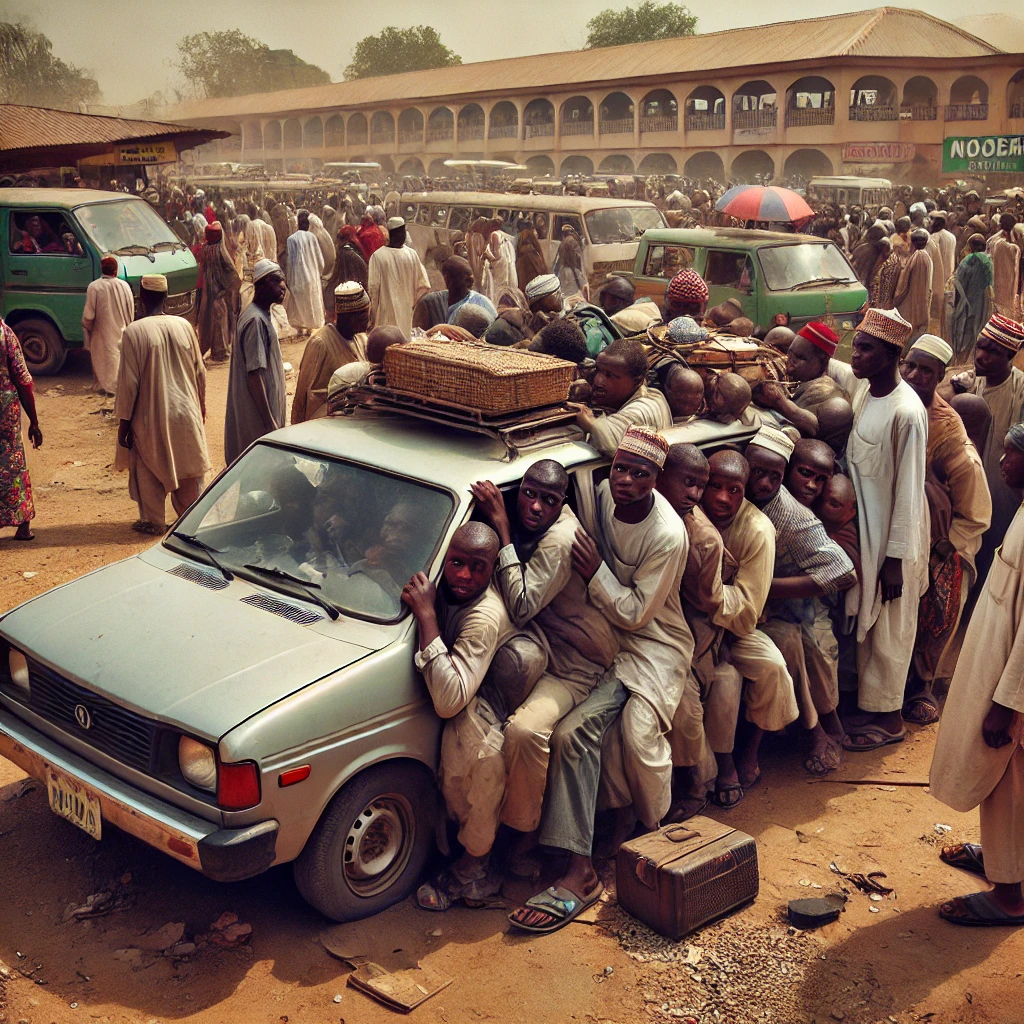
I had to travel from Bida, Niger State, to Ilorin. Initially, I thought the distance wasn’t much, so rather than leave as early as 6 or 7 a.m., I decided to leave around 9 a.m. When I got to the popular park I know, there were no vehicles ready. Then, a metallic-colored two-door car passed by, and I decided to board it. Inside, the car was cramped. There were four people supposed to sit at the front, but instead, there was the driver, myself, and two other passengers. The back seat was packed with a woman and three children, another woman with a child, and two adults—seven people in a space meant for just four. We were packed in like sardines, and we set off. As if the cramped space wasn’t bad enough, the driver was reckless. I kept an eye out for road safety officers, and yes, we saw some on the road, but the driver sped past them without a care. I started to wonder if traffic laws were different in Niger, because overloading seemed to be the norm on that route. The driver kept stopping to pick up and drop off passengers along the way, and the journey felt endless. Finally, I reached my destination. After two days in Ilorin, I needed to head back to Bida and then to Abuja. This time, I’d learned my lesson, so I decided to leave early. By 6:30 a.m., I was at the park, hoping to avoid the delays of my first trip. When I arrived at the same popular park, the driver told me he wasn’t going directly to Bida. Apparently, they preferred to load passengers to Mokwa or Jebba, which were shorter routes. After waiting for a while, I was advised to head to Gambari with another stranded passenger. We arrived at Gambari around 8:30 a.m., but we couldn’t leave until after 2 p.m. because there weren’t enough passengers. The recent hike in fuel prices had a ripple effect on transportation, and people were only traveling when absolutely necessary. Eventually, we left, but along the way, I was feeling so pressed that we had to stop so I could relieve myself in the bush. I was also feeling nauseous, so I splashed some water on my face before we continued.
On our way , we saw a man carrying a woman seated on bags of rice on his bicycle.
This driver had the right number of passengers, but he also did logistics work, so the car was overloaded with goods. To make things worse, the driver had to take a longer route because trucks had blocked the usual one. We didn’t reach our destination until around 8 p.m.
These experiences highlight the urgent need for relevant agencies, such as the Federal Road Safety Corps (FRSC) to step in and enforce stricter regulations on road safety, vehicle capacity, and driver conduct. Overloading, reckless driving, and the unregulated picking up and dropping off of passengers create an unsafe environment for travelers and jeopardise public safety. Additionally, the transportation system in this region needs better organisation to avoid unnecessary delays and improve the overall travel experience. It is imperative that authorities work with transportation providers to ensure safer, more efficient travel for all passengers, while also addressing the ripple effect caused by rising fuel costs and reduced public transport availability.