For decades, Nigeria’s oil wealth has been described as abundant — yet the benefits have often appeared distant from everyday citizens. Budgets struggle, states depend heavily on federal allocations, and public services remain underfunded despite strong production capacity.
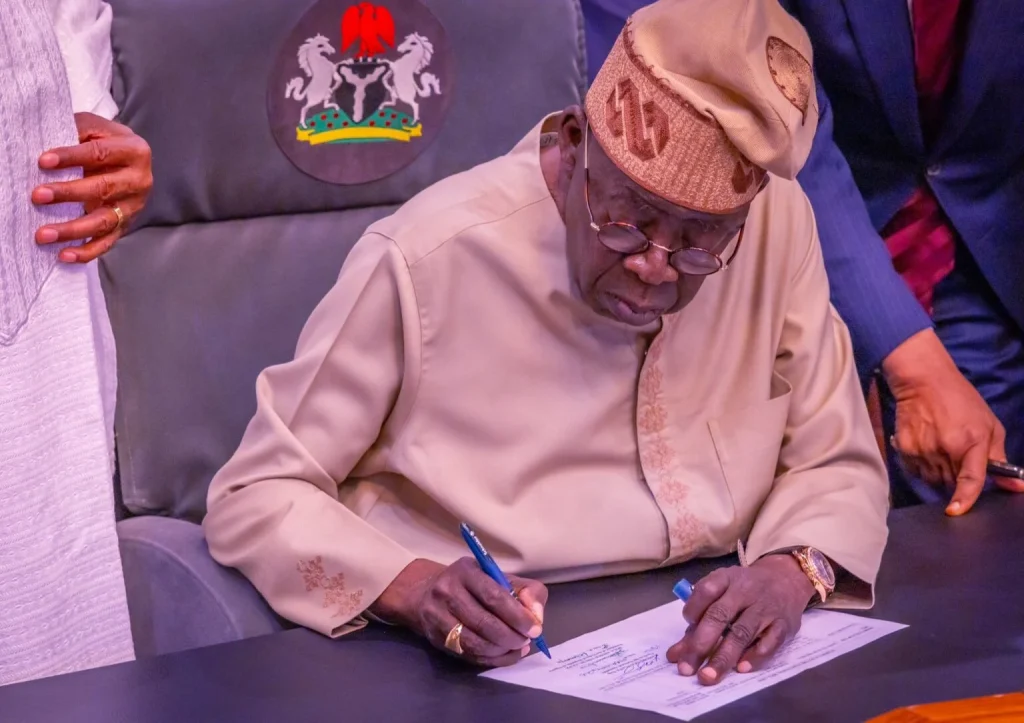
This week, President Bola Ahmed Tinubu signed an executive order designed to change that long-standing contradiction.
The directive targets how oil revenues are calculated, retained and distributed under the Petroleum Industry Act, and more importantly, how much actually reaches the Federation Account — the shared pool funding federal, state and local governments.
Rather than announcing a new tax or borrowing plan, the government is attempting something different:
recover money believed to already belong to the country.
The Core Problem: Earnings vs. Remittances
Nigeria earns billions from crude oil annually.
But what government receives after deductions is far smaller.
Under the current structure, Nigerian National Petroleum Company Limited retains multiple portions of oil proceeds before remitting balances to the Federation Account.
Over time, several deductions accumulated:
-
management fees on profit oil and gas
-
retained earnings for operations and investments
-
frontier exploration allocations
-
infrastructure and remediation funding channels
Individually, each deduction had a policy justification.
Collectively, they significantly reduced public revenue.
The new order is built on a simple argument:
too many layers were subtracting from national income before citizens ever benefited.
What the Executive Order Changes
The reform does not stop oil production or alter contracts with operators.
Instead, it changes where the money goes first.
Money Goes Directly to Government
Oil companies must now pay royalties, taxes and profit shares straight into the Federation Account — not through multiple retention structures.
Frontier Exploration Funding Removed
Funds previously reserved for speculative frontier basin exploration will now enter government revenue instead of remaining with NNPC Limited.
Management Fee Eliminated
The additional 30% management retention has been discontinued on the grounds that the company already keeps earnings for operations.
Gas Flare Penalties Redirected
Environmental penalties paid by oil companies will now go directly to public funds rather than a separate infrastructure pool.
In effect, the government is reversing the flow:
from company-first accounting to treasury-first accounting.
Why It Matters Beyond Oil
The administration argues the reform is less about petroleum policy and more about fiscal survival.
Nigeria’s budgets rely heavily on oil receipts. When inflows fall short, government turns to borrowing — increasing debt and limiting social spending.
By tightening revenue channels instead of raising taxes, the policy aims to:
-
strengthen public finances
-
improve allocations to states and LGAs
-
support healthcare and education funding
-
stabilize national budgeting
Repositioning the National Oil Company
Another objective is structural.
The government wants NNPC Limited to operate strictly as a commercial company, not both regulator-like participant and revenue gatekeeper at the same time.
Officials say separating those roles reduces conflicts of interest and improves transparency in cost calculations under production-sharing contracts.
A Larger Reform Ahead
The executive order is not the final step.
Government has indicated a broader review of the Petroleum Industry Act will follow in consultation with stakeholders to address structural gaps revealed since its implementation.
The Bigger Question
Nigeria’s resource challenge has rarely been production — it has been conversion:
turning natural wealth into public value.
This reform attempts to answer a long-standing national debate:
Is Nigeria short of money, or short of access to its own money?
The coming months will reveal whether redirecting oil revenues can translate into visible improvements in governance and public services — the true measure of reform in a resource-dependent economy.
Etạ Insight:
When fiscal systems change quietly, citizens may not notice immediately.
But if allocations rise and borrowing drops, the impact eventually shows — not in oil terminals, but in classrooms, hospitals and local budgets.