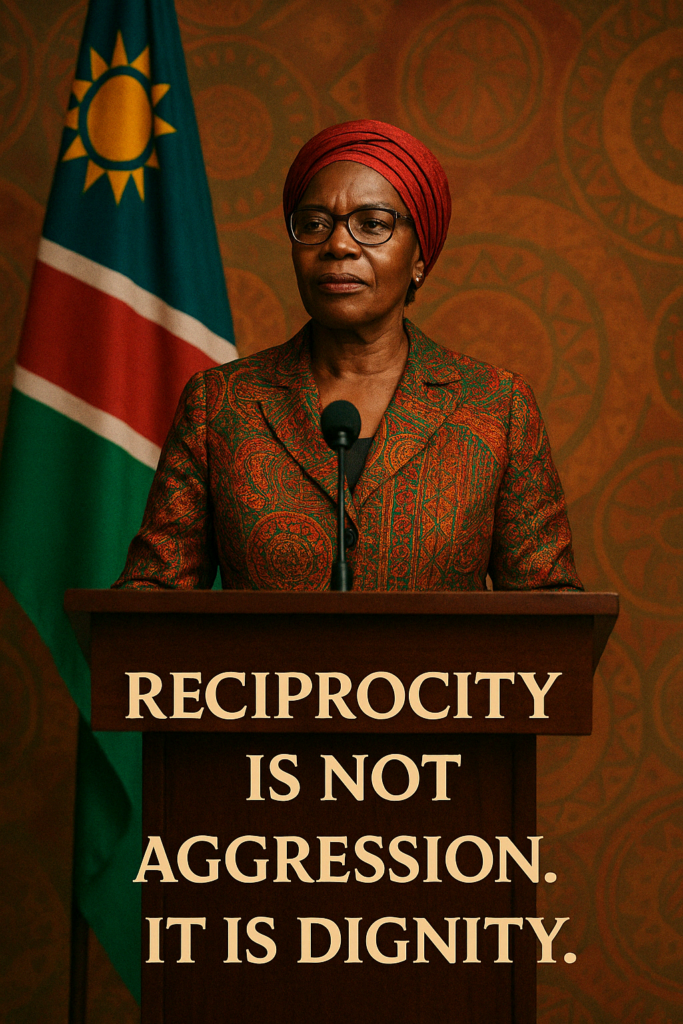
In a bold recalibration of immigration and diplomatic priorities, Namibia has signaled a decisive shift in its international policy by announcing the planned deportation of over 500 American nationals residing illegally within its borders. The move, led by newly inaugurated President Netumbo Nandi-Ndaitwah, marks a profound moment of sovereign assertion and a call for balanced international engagement.
Framing the decision as a matter of principle rather than punishment, President Nandi-Ndaitwah made it clear: Namibia will no longer tolerate one-sided visa arrangements that privilege Western nations while subjecting African citizens to stringent entry requirements. “If our citizens must secure visas to enter the United States, then we expect the same standard of respect in return,” she said, underscoring that reciprocity—not hostility—is at the heart of the new directive.
Namibian authorities have begun a structured deportation process targeting American nationals who have either overstayed their visas or failed to comply with the country’s immigration laws. Government officials, in collaboration with law enforcement, have emphasized that the operation will be carried out with strict adherence to legal and human rights standards.
The announcement has drawn global attention, sparking both applause and apprehension. While some critics warn of potential diplomatic friction with the United States, others see Namibia’s stance as a necessary and overdue message of self-respect and policy independence. Pan-African commentators and civil society voices across the continent have hailed the move as an empowering precedent, praising Namibia for challenging double standards often embedded in international mobility regimes.
But Namibia’s shift in immigration policy isn’t only about reciprocity—it’s also about African unity. Alongside the visa enforcement campaign, President Nandi-Ndaitwah unveiled an initiative to open Namibia’s borders to citizens of all African countries, effectively making visa-free entry for Africans a new national priority.
This dual-track approach sends a powerful message: while Namibia demands fairness from the global North, it is simultaneously extending a hand of solidarity to its African neighbors. The President spoke passionately about her vision for a continent without internal borders, where Africans are free to move, trade, and connect without the bureaucratic obstacles that often hamper progress.
“An African should not be made to feel like a foreigner on African soil,” she declared. “It is time we build a continent grounded in cooperation, dignity, and shared prosperity.”
The shift signals a broader repositioning of Namibia on the world stage—one that seeks to balance diplomatic assertiveness with a Pan-African identity. As the world watches closely, Namibia is making it clear: national dignity and continental unity are not mutually exclusive—they are inseparable pillars of its foreign policy.