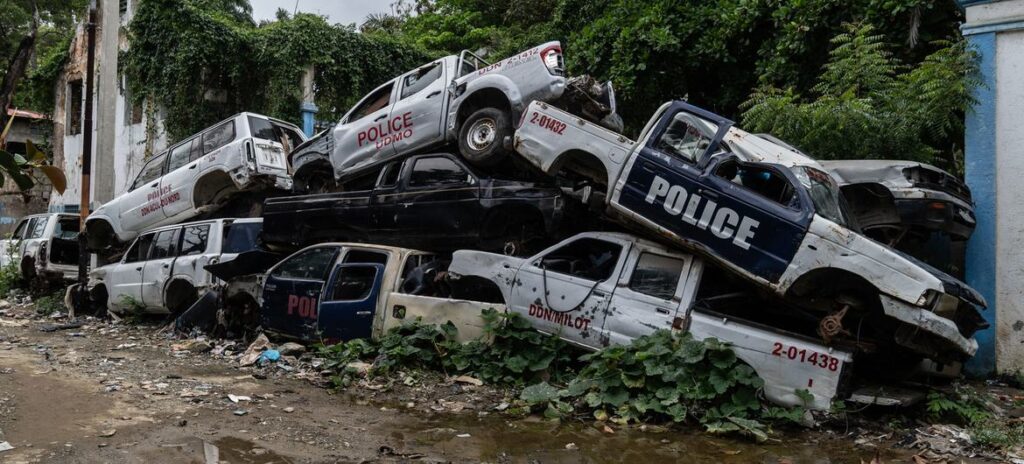
Haiti is teetering on the brink of collapse as violent gang activity continues to escalate across the country, United Nations Special Representative María Isabel Salvador told the UN Security Council recently.
Ms. Salvador reported that organized crime groups are waging a “deliberate and coordinated” campaign to expand their territorial control and paralyze the capital, Port-au-Prince. Once relatively stable areas like Delmas and Pétion-Ville have now become targets of violent attacks. Meanwhile, the storming of Mirebalais town marked the fifth prison break in less than a year.
“The magnitude of the violence has sown panic among the population,” Salvador said, citing UN figures showing that in February and March alone, more than 1,000 Haitians were killed and nearly 400 injured. Additionally, over 60,000 people were newly displaced, adding to the already one million internally displaced Haitians as of late 2024.
In response to the rampant insecurity, many citizens have formed protection groups to defend their families, homes, and communities. Waves of public frustration have also triggered mass protests across the nation, with thousands demanding urgent action to restore security.
International Support: A Matter of Urgency
While Haitian authorities are taking steps to reinforce security operations within their limited means, Salvador stressed that these efforts alone are insufficient to counter the level of organized violence the country faces.
“At this critical juncture, all Member States must increase support to Haiti’s security forces, particularly the Multinational Security Support (MSS) Mission – not as a matter of choice but of necessity,” she said. “The country needs us more than ever.”
The MSS Mission, authorized by the UN Security Council in October 2023 and led by Kenya, was established to assist the Haitian National Police in combating gang violence and restoring public order. The Mission focuses on operational support, capacity-building, and coordination with Haitian police and armed forces. However, Salvador noted that it still faces severe challenges, including shortages of resources and personnel.
UN Operations Under Strain
The escalating crisis has severely disrupted UN humanitarian operations. Commercial flights into Port-au-Prince remain suspended, major roads are blocked, and agencies are increasingly forced to operate remotely, reducing their ability to deliver life-saving aid.
“The UN’s ability to stay operational hinges on continued access, predictable funding, and support to logistical lifelines like the World Food Programme (WFP) and the UN Humanitarian Air Service (UNHAS),” Salvador warned. Any further reduction in aid could have devastating consequences for millions of Haitians.
Health, Education, and the Threat of Collapse
Beyond the security crisis, Haiti’s health and education sectors are also collapsing under the pressure. At least 39 health facilities and over 900 schools have closed due to widespread violence. Cholera outbreaks are spreading, and cases of sexual and gender-based violence are surging, especially in overcrowded displacement camps lacking adequate shelter, sanitation, and protection services.
National authorities, though actively coordinating security efforts, lack the necessary resources and capacity to counter heavily armed and coordinated gang networks without robust international assistance.
“We are approaching a point of no return,” Salvador emphasized. “Without timely and decisive international support, the violence will continue to escalate, and Haiti could face total collapse.”
As the crisis deepens, Salvador’s urgent call to action resonates globally, highlighting the critical need for coordinated, immediate support to prevent Haiti from plunging further into chaos.