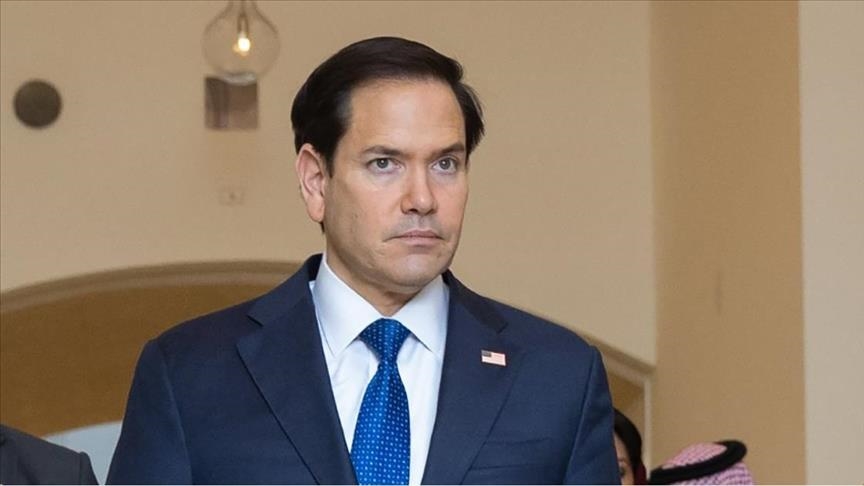
ROME — In an exclusive interview with CBS Face the Nation, U.S. Secretary of State Marco Rubio provided crucial insights into the Biden-Trump administration’s foreign policy direction amid heightened global tensions. Speaking from Rome following the inaugural mass of Pope Leo XIV, Rubio addressed a wide range of pressing international issues, including Russia’s war in Ukraine, Venezuela’s controversial prison gang activities, humanitarian concerns in South Africa, and the deepening Gaza conflict.
Russia-Ukraine Talks: “A Step Forward, But Time is Running Out”
Rubio acknowledged the limited progress made in recent peace talks between Russia and Ukraine held in Türkiye—the first such engagement in nearly three years. While Russian President Vladimir Putin did not attend the talks he proposed, a prisoner exchange involving 1,000 individuals emerged as a positive outcome.
“They were not a complete waste of time,” Rubio said, adding that both sides are preparing documents outlining their ceasefire expectations. However, he emphasized that the U.S. remains wary of being drawn into a time-wasting strategy. “We don’t want to be involved in this process of just endless talks; there has to be some progress.”
Rubio suggested that a direct meeting between President Trump and President Putin could be the key to breaking the diplomatic deadlock—a move that could carry enormous geopolitical ramifications.
Sanctions on Russia: Senate Momentum Grows
Rubio also addressed looming U.S. Senate efforts to pass new sanctions on Russia, spearheaded by Senator Lindsey Graham. He clarified that the administration has informed Russia about the bipartisan push, noting it’s a legislative effort the White House neither initiated nor can halt.
Venezuela and Terror: U.S. Disagrees with Intelligence Community
Turning to Latin America, Rubio took a sharp stance against Venezuela’s Tren de Aragua (TDA) gang, recently designated a terrorist organization by the U.S. He rejected an intelligence assessment that denies TDA’s role as a proxy of the Maduro regime.
“They’re wrong,” Rubio stated firmly, aligning instead with FBI findings that label TDA as a destabilizing force allegedly involved in extrajudicial killings abroad. He accused the Venezuelan government of fostering the gang’s influence and allowing returned members to be celebrated on arrival.
“This is a group the regime in Venezuela uses not just to try to destabilize the United States but to project power,” he said, citing a political assassination in Chile linked to the gang.
South African Refugee Policy: Controversy Over Afrikaner Claims
The U.S. administration’s decision to prioritize immigration for Afrikaners—white South Africans—has sparked international scrutiny, especially following President Trump’s unverified claim of “genocide” in South Africa.
Rubio defended the policy, citing land seizures and racial violence against Afrikaner farmers. While he stopped short of legally declaring a genocide, he claimed there is “evidence that people have been murdered” and dispossessed based on race.
“We welcome them to the United States,” Rubio said, positioning the move as a humanitarian response rather than a racial preference.
Middle East Escalation: Gaza Crisis Deepens
As Israel expands its military campaign in Gaza, the U.S. position remains one of conditional support. Rubio reiterated Washington’s backing for Israel’s goal of eliminating Hamas but also stressed a desire for a ceasefire to reduce civilian suffering.
“We support a future for the people of Gaza that is free of Hamas and full of opportunity,” Rubio said, placing the burden of conflict resolution squarely on Hamas’s refusal to disarm and release hostages.
He confirmed that U.S. envoys, including Ambassador Witkoff, are engaged in ongoing negotiations to facilitate hostage releases and a temporary truce.
Iran: A Nuclear Crossroads
Rubio also briefly touched on the sensitive matter of Iran’s nuclear ambitions. He described the Islamic Republic as a “threshold nuclear state,” indicating serious concerns about Iran’s uranium enrichment activities. However, he did not provide details on the nature of renewed U.S.-Iran talks or potential red lines.
Analysis:
From Eastern Europe to Latin America and the Middle East, the United States under Secretary Rubio’s diplomatic stewardship is navigating multiple flashpoints with a complex mix of confrontation, negotiation, and moral positioning. As the world watches, the outcomes of these diplomatic engagements could shape international relations for years to come.