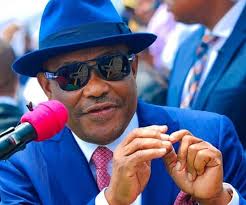
In a bold move highlighting the tensions between central governance and local autonomy, Nigeria’s Federal Capital Territory (FCT) Minister, Barrister Ezenwo Nyesom Wike, has announced plans to withhold 10 percent of the statutory allocation to FCT Area Councils. The decision comes in response to a protracted strike by primary school teachers over unpaid minimum wages.
The strike, which has left thousands of children out of school in Nigeria’s capital, underscores a broader issue faced in many developing democracies: the challenge of balancing fiscal autonomy for local governments with national obligations to public service delivery.
Wike criticized the Area Councils for failing to pay the revised national minimum wage, stating that despite prior engagements and release of funds, the councils had failed to act. “It is embarrassing that teachers have to resort to strikes to demand what is lawfully theirs,” the Minister said.
Although the Minister acknowledged the constitutional limitations in dealing with elected Area Council Chairmen, he emphasized that his responsibility to protect residents’ welfare — especially access to education — could not be compromised. To that end, Wike revealed plans to establish a committee that will ensure direct disbursement of teachers’ wages from the withheld funds.
“I cannot sack elected officials, but I can withhold their Internally Generated Revenue (IGR) allocation if they fail to meet their responsibilities,” he said. Dismissing concerns about infringing on local government autonomy, Wike asked, “Do you want me to fold my arms and allow our children to stay home in the name of LGA autonomy?”
Beyond the education crisis, the Minister outlined key infrastructure developments to mark the second anniversary of President Bola Ahmed Tinubu’s administration. In a symbolic display of continuity and achievement, several capital projects across FCT are slated for commissioning — including roads in Ketti, Takushara, Ushafa, Pai, and War College areas spanning four Area Councils.
A highlight of the anniversary is the long-awaited renovation of Abuja’s International Conference Centre (ICC), once described by Wike as an “eyesore.” The facility, a key venue for regional and international conferences, has now been commercialized with a maintenance contract awarded to German construction giant Julius Berger.
Wike also revealed ongoing partnerships with international firms, notably CGC, a Chinese construction company, to expand water supply to under-served satellite towns like Bwari, Kubwa, and Karu. The project aligns with broader development goals to reduce infrastructure gaps in peri-urban communities and is supported by allocations in Nigeria’s national and statutory budgets.
On urban safety, the Minister disclosed new security-integrated streetlights with CCTV technology to combat vandalism and ensure better policing of public spaces. He also addressed city planning issues, including land administration reforms, and reaffirmed the administration’s anti-corruption stance.
Wike, a key figure in Nigerian politics, did not shy away from political commentary. Addressing recent defections from the opposition People’s Democratic Party (PDP) to the ruling All Progressives Congress (APC), he attributed the trend to internal party failures, including leadership impunity and prioritization of personal over collective interests.
The Minister also spoke warmly of First Lady Senator Oluremi Tinubu, praising her humility and personal involvement in national projects. He cited her calls to appreciate completed infrastructure and offer input on urban beautification as evidence of a First Lady “of a different kind” — deeply invested in Nigeria’s development trajectory.
As Nigeria’s capital gears up to celebrate Tinubu’s second year in office, the FCT Administration is clearly positioning itself as a model of proactive governance, determined to enforce accountability at all levels while showcasing achievements that speak to both local and global development standards.