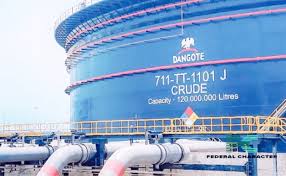
Nigeria is poised for a major shift in its energy stability as the Dangote Petroleum Refinery confirms it will begin daily supply of 50 million litres of Premium Motor Spirit (PMS) to the Nigerian market starting December 1—a milestone that could redefine the nation’s fuel economy and significantly reduce dependence on imports.
In a formal correspondence to the Nigerian Midstream and Downstream Petroleum Regulatory Authority (NMDPRA), the refinery laid out an ambitious supply framework: 1.5 billion litres of PMS each in December 2025 and January 2026, followed by an increased output of 1.7 billion litres monthly beginning February 2026. For a country that has struggled for decades with fuel scarcity, long queues, and import vulnerabilities, this announcement signals the dawn of a more stable and self-sustaining downstream sector.
David Bird, Managing Director of the refinery, emphasized the facility’s readiness to deliver the volumes while inviting the regulator to monitor operations in real time. According to him, the refinery will open its doors to NMDPRA officials from December 1 to “validate and publish daily supply volumes,” a gesture he describes as part of the company’s commitment to “full transparency” in Nigeria’s most sensitive economic sector.
Over the weekend, Aliko Dangote, President of Dangote Industries Limited, reinforced this commitment during a visit by the South-South Development Commission (SSDC). He revealed that the refinery currently produces 40–45 million litres of PMS daily, a figure expected to rise to the 50-million-litre mark in December—a strategic push designed to ensure a smooth, scarcity-free festive season for Nigerians.
Beyond meeting local demand, Dangote reiterated the broader vision: positioning Africa not just as a consumer, but as an exporter of refined petroleum products. With over 100,000 workers expected to be engaged across the refinery and fertiliser complex expansions, the initiative is also driving industrialization and job creation at an unprecedented scale.
The SSDC delegation, led by Managing Director Usoro Offiong Akpabio, praised the refinery as a cornerstone of Nigeria’s industrial resilience. Akpabio highlighted emerging opportunities for collaboration in petrochemicals, logistics, CNG development, and export-driven manufacturing—areas that could fortify economic growth across the South-South region.
However, despite its capacity, the refinery stressed the need for regulator-backed support in streamlining vessel clearance and crude import processes. Bird warned that existing delays introduce “unnecessary costs and inefficiencies,” affecting not just refinery operations but also marketers depending on timely product evacuation.
As December approaches, all eyes are now on the Dangote Refinery—poised to play a critical role in stabilizing Nigeria’s fuel supply, boosting regional cooperation, and redefining the continent’s refining landscape.