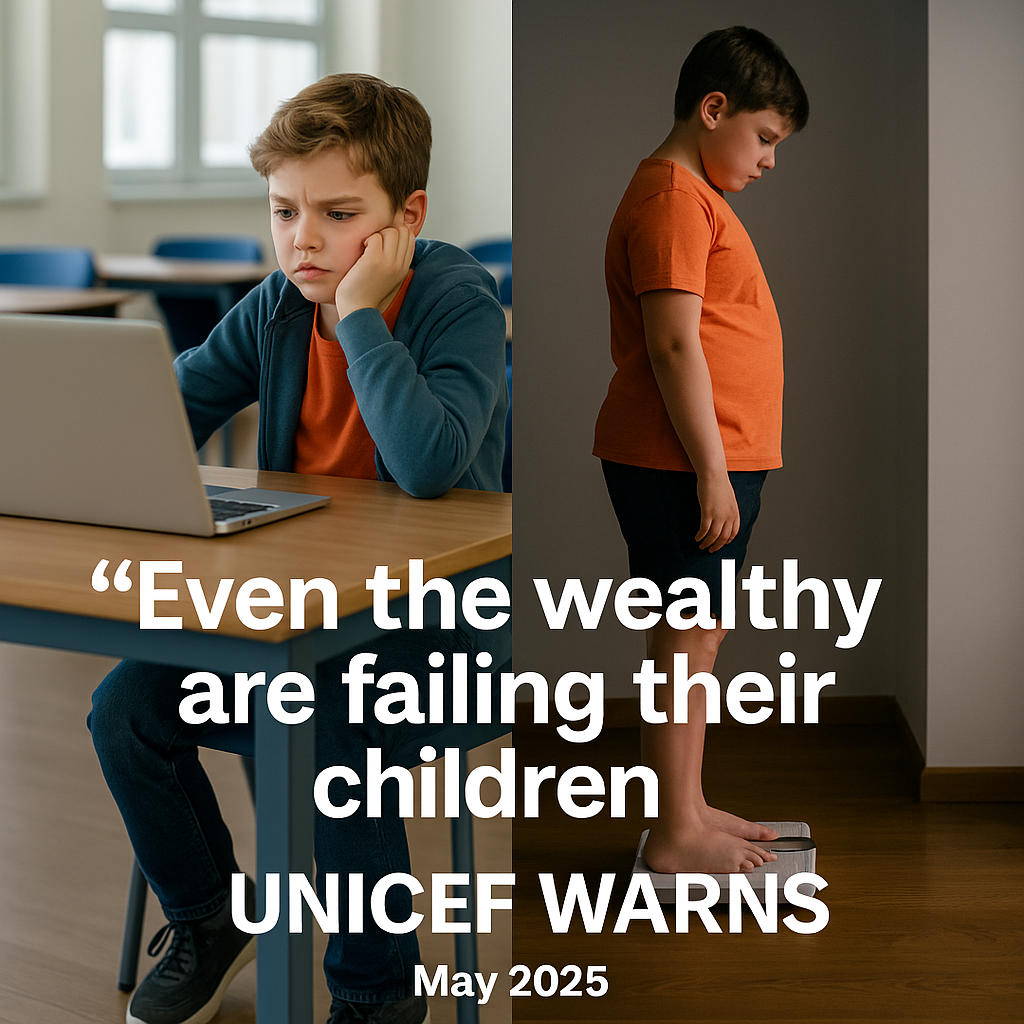
A new report from the United Nations Children’s Fund (UNICEF) has revealed that children in some of the world’s most affluent countries are facing a worrying decline in academic performance, mental health, and physical well-being — a direct consequence of the COVID-19 pandemic.
Comparing data between 2018 and 2022, UNICEF found that pre-existing issues in children’s education and health were significantly exacerbated by the pandemic. As schools shut down and virtual learning became the norm, many children struggled to keep up, while feelings of isolation and poor nutrition further compounded the crisis.
“This data sets a worrying benchmark for children’s wellbeing,” said Bo Viktor Nylund, Director of UNICEF’s research office, Innocenti.
Falling Behind in the Classroom
According to the report, children in many high-income countries are now seven to twelve months behind where they should be academically. Reading and mathematics skills were hit the hardest — especially among children from disadvantaged backgrounds.
The numbers are staggering: across 43 countries studied, around 8 million 15-year-olds were deemed not functionally literate or numerate, meaning nearly half couldn’t comprehend a basic text.
This alarming trend raises serious concerns about future development and job preparedness.
Mental Health and Emotional Wellbeing
The pandemic’s toll on young minds was also significant. In 14 out of 32 countries with available data, life satisfaction among children dropped, while adolescent suicide rates — which had been declining — have now plateaued.
Weight gain and obesity among children aged 5 to 19 also rose, particularly among those from lower-income families. With poor physical health often tied to mental health issues, the dual burden is deepening the inequality gap.
The Best and Worst Places to Be a Child
UNICEF ranked the Netherlands, Denmark, and France as the top three countries for child wellbeing based on a combination of physical health, mental wellness, and skill development.
At the bottom of the list were Mexico, Türkiye, and Chile, where children face the most serious challenges across all indicators.
A Call to Action
UNICEF is urging governments to act swiftly and strategically. Mr. Nylund emphasized the need for a “coherent” and “holistic” approach that supports every stage of a child’s life. The report also strongly advocates for youth participation in decision-making, giving children a voice in the policies that shape their futures.
The agency warns that the hard-won gains made in child welfare in wealthy nations are now at risk. It calls for focused interventions, especially for disadvantaged children, to create more equitable and resilient education systems going forward.
Read more at news.un.org
Follow Etamagazine for more stories on global education, health, and youth development.