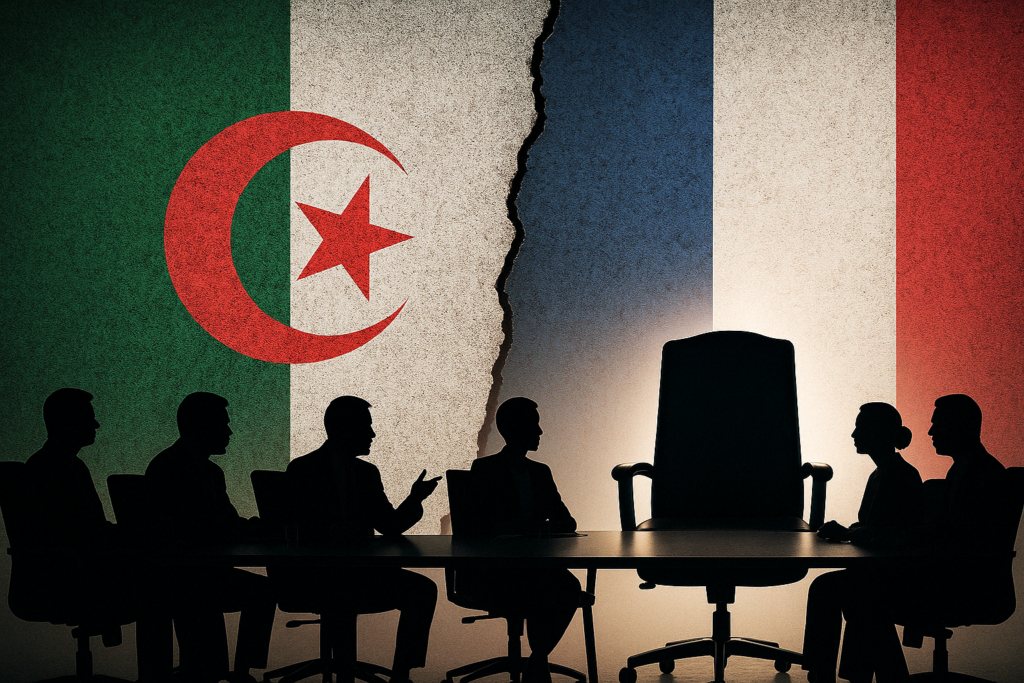
Algeria has expelled 12 French diplomats within a 48-hour window, in what analysts are calling a sharp escalation in a relationship long marred by colonial legacies, political mistrust, and competing regional interests.
The expulsions come in response to the recent arrest of three Algerian nationals in France — including a consular official — suspected of participating in the controversial 2024 abduction of outspoken Algerian influencer and government critic, Amir Boukhors. Though Boukhors was released shortly after his abduction, the diplomatic fallout has reignited long-simmering tensions between Algiers and Paris.
French Foreign Minister Jean-Noël Barrot swiftly condemned the expulsions, urging Algeria to reconsider. “If the decision to send back our officials is upheld, we will be left with no option but to respond immediately,” Barrot stated, according to PressTV. The French government has signaled that reciprocal action could follow, potentially triggering a new phase of diplomatic standoff.
Ironically, the move comes on the heels of recent efforts aimed at thawing strained relations. Barrot had only recently concluded a visit to Algiers, where he met with President Abdelmadjid Tebboune in what was widely seen as a symbolic push to reset ties. Both nations had expressed willingness to “rebuild a partnership of equals” — a sentiment now seemingly undermined by the latest developments.
Underlying this crisis is a deeper story of unresolved colonial-era trauma and competing geopolitical alignments. France’s recent public endorsement of Morocco’s autonomy plan for Western Sahara has not gone unnoticed in Algiers. Algeria, a strong advocate for Western Sahara’s independence, viewed France’s position as a betrayal — prompting the recall of its ambassador to Paris last July.
More recently, Paris also denied entry to the Algerian ambassador’s wife, a move described by Algerian officials as a deliberate provocation. Add to that France’s plea for clemency in the case of jailed Franco-Algerian writer Boualem Sansal, and it’s clear the two nations have not yet found a path to sustained diplomacy.
The expulsion also raises questions about the inviolability of diplomatic personnel and the mechanisms by which states resolve tensions around politically sensitive arrests. Algeria has protested the arrest of its consular official, calling it a breach of protocol, and summoned the French ambassador in Algiers to lodge a formal complaint.
Despite high-level contacts — including a recent phone conversation between French President Emmanuel Macron and President Tebboune — the relationship remains fragile. While both countries have vowed to sustain dialogue, strengthen trade, and resume security cooperation, the underlying mistrust appears far from resolved.
With Europe’s growing reliance on North African partnerships for energy and migration management, and Africa’s shifting alliances in a multipolar world, this dispute underscores the volatility that still characterizes Franco-Algerian relations — and the broader challenges of recalibrating post-colonial ties in the 21st century.