As rapid urbanization sweeps across Africa, Nigeria’s capital city—Abuja—finds itself confronting a recurring and deadly challenge: flooding. This week, the Federal Capital Territory Administration (FCTA) issued a stern warning to residents of Lokogoma, a flood-prone area in Abuja Municipal Area Council (AMAC), to immediately stop building on waterways and drainage paths or risk demolition and evacuation.
The warning was issued during a Joint Site Visit (JSV) by a coalition of agencies, including the Department of Development Control, Urban and Regional Planning, Emergency Management, Water Board, and Engineering Services under the FCDA. The coordinated visit aimed to assess areas vulnerable to flooding and urban development risks.
Mukhtar Galadima, Director of the Department of Development Control, led the mission, stressing that any structures encroaching on natural water channels would be removed. He revealed plans not only to demolish these illegal developments but also to widen the existing channels to allow water to flow freely.
“This is enough notice,” Galadima stated. “No rebuilding of previously demolished structures will be tolerated. The Lokogoma area is well-known for flood disasters, and proactive intervention is crucial to saving lives.”
While these measures are necessary, Galadima described them as temporary solutions. He noted that a permanent resolution lies in strategic investment in engineering infrastructure, proper urban planning, and stringent enforcement of building regulations.
The inspection team also visited Usuma District, where development near the Usman Dam—a key water source for Abuja—raised fresh concerns. Authorities flagged several suspicious developments and directed relevant agencies to investigate their approval status, promising swift action against violations.
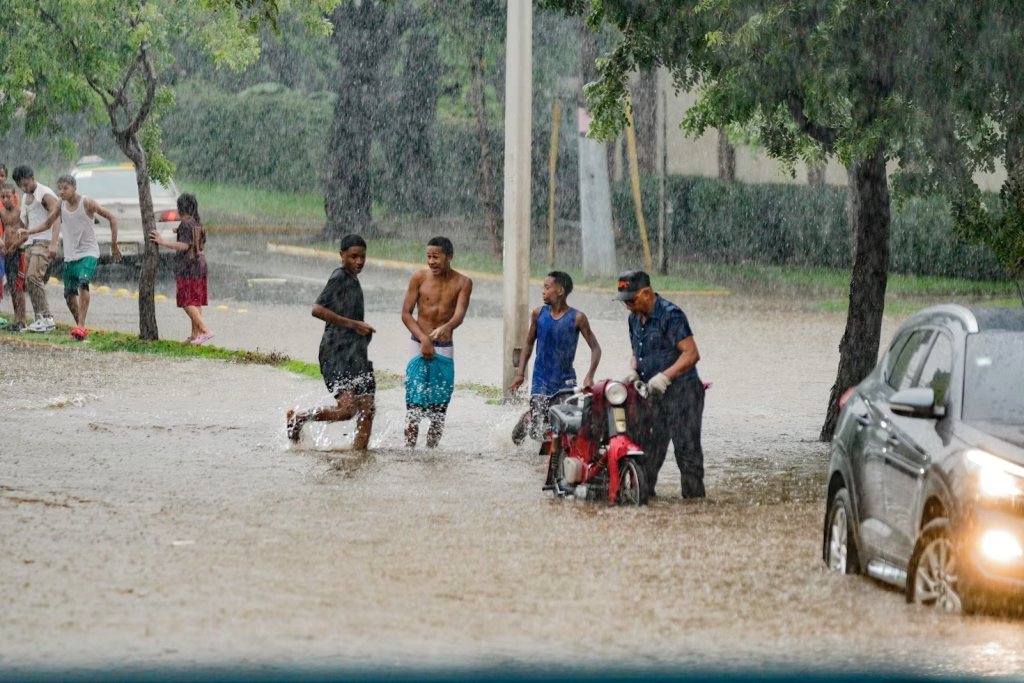
This situation in Abuja is not unique. Across many African cities, unregulated urban growth, weak planning enforcement, and climate-induced rainfall patterns are exposing millions to the risk of urban flooding. The case of Lokogoma serves as a microcosm of a much broader crisis—where infrastructural gaps and policy inertia meet the lived reality of vulnerable urban populations.
Why it matters globally:
As African cities continue to expand, climate resilience, sustainable planning, and risk-sensitive development must become core to governance. Abuja’s struggle is a wake-up call: the cost of inaction is paid in lives lost and communities displaced.